Sikinos Vacation Rental Property Investment Guide
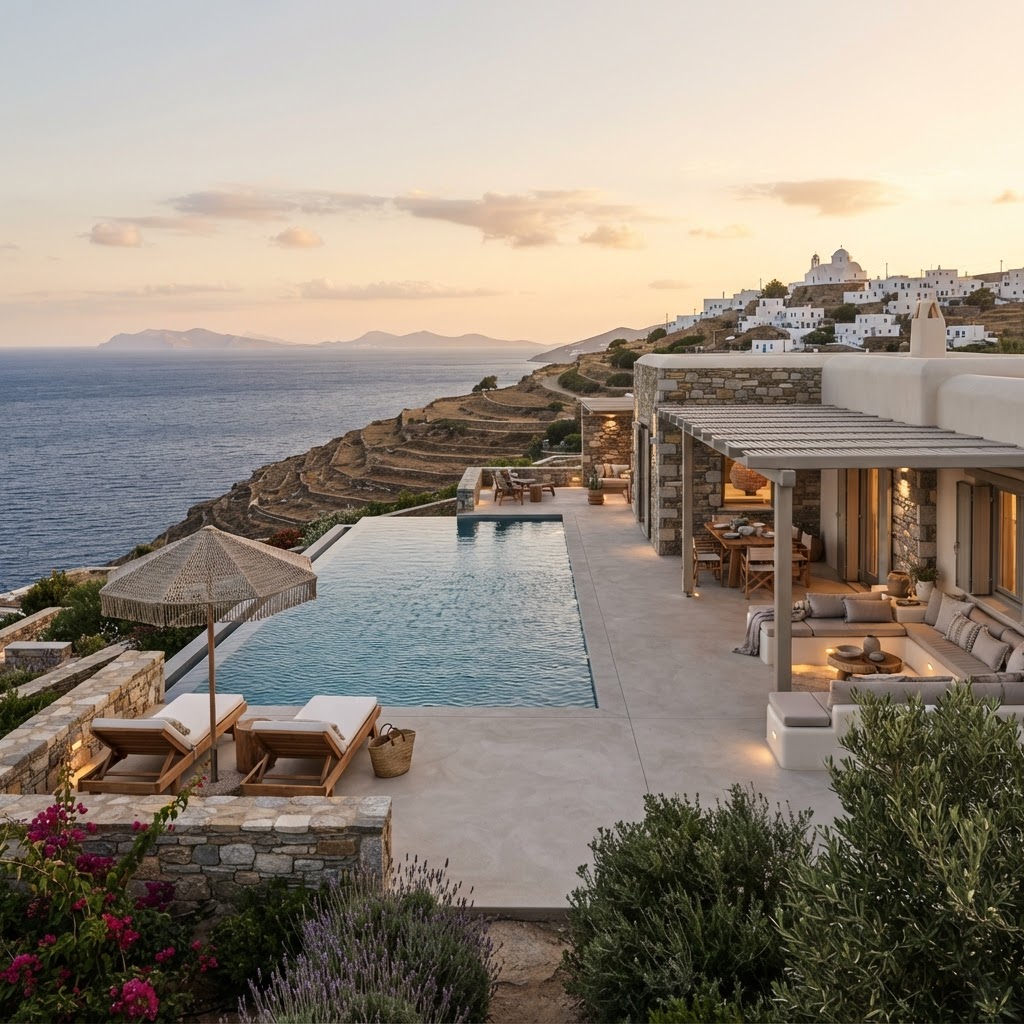
Sikinos vacation rental investment offers a rare opportunity to enter one of the Cyclades' most authentic and under-commercialised island markets. Nestled between Ios and Folegandros, this small Greek island has remained largely untouched by mass tourism, creating compelling conditions for early-stage investors seeking high-yield holiday rental properties with genuine appreciation potential. This comprehensive guide examines every dimension of investing in Sikinos vacation rentals—from market fundamentals and property acquisition processes to legal compliance, renovation costs, guest demand patterns, and long-term portfolio strategy. Explore current Sikinos listings and Greek island opportunities to see available properties. Whether you're considering a traditional stone house in Chora, a coastal plot for new development, or a conversion opportunity in the port village of Alopronia, you'll find the expert framework needed to evaluate, acquire, and operate a profitable vacation rental on this emerging Cycladic island.
Key Takeaways
- Sikinos offers significantly lower entry costs than neighbouring Cycladic islands while maintaining strong summer occupancy rates among authenticity-seeking travellers.
- Property supply is extremely limited with fewer than 200 permanent structures, making pre-market relationships and local networks essential for deal sourcing.
- Greek short-term rental licensing became mandatory in 2024, requiring specific permits, tax registration, and compliance with regional occupancy limits before accepting bookings.
- Renovation and infrastructure costs typically add 40–60% to purchase price due to island logistics, limited contractor availability, and heritage preservation requirements.
- Peak season (July–August) drives 65–75% of annual revenue, demanding strategic shoulder-season marketing and potential long-term winter lets to optimise cash flow.
- Water scarcity and electricity constraints directly impact guest capacity and operational costs, requiring careful property selection and infrastructure investment.
- Capital appreciation on Sikinos has outpaced rental yield since 2022 as improved ferry connections and sustainable tourism initiatives attract second-home buyers and boutique hospitality developers.
Understanding the Sikinos Vacation Rental Market: Island Profile and Investment Fundamentals
Island Geography and Accessibility Context
Sikinos occupies a unique position in the western Cyclades, sitting between Ios and Folegandros with a permanent population hovering around 300 residents. This 38-square-kilometre island features two main settlements—the hilltop Chora (also called Kastro-Chorio) and the port village of Alopronia—connected by a winding 3.5km road that defines much of the island's character.
Ferry connectivity has improved substantially since 2024, with four to six weekly connections during peak season (June-September) linking Sikinos to Piraeus, Santorini, Ios, and Folegandros. Journey times from Piraeus average 5-7 hours depending on routing, while the Santorini connection takes just 90 minutes, positioning Sikinos as an accessible yet authentically unspoiled alternative for travellers seeking refuge from overtourism.
Tourism Evolution and Current Visitor Profile
Sikinos has deliberately maintained its low-density tourism model, with annual visitor numbers estimated at 15,000-18,000 in 2026—a fraction of neighbouring islands. The visitor demographic skews heavily toward:
- Experienced Cyclades travellers (40-55 age bracket) seeking authentic Greek island life
- Hiking and nature enthusiasts drawn to coastal trails and archaeological sites
- Couples and solo travellers rather than large groups or party tourists
- Repeat visitors who discovered the island through island-hopping itineraries
Average stays run 3-5 nights, significantly longer than the 1-2 night stopovers common on more commercialised islands, creating stable occupancy patterns for vacation rental operators.
Accommodation Supply Analysis
The limited accommodation stock creates natural scarcity value, though it also means market absorption capacity for new inventory remains modest. Sikinos currently has no large hotels, all-inclusive resorts, or branded properties—a regulatory and cultural reality that preserves the investment thesis for individual vacation rental owners.
Competitive Positioning Within the Cyclades
Compared to neighbouring islands, Sikinos presents a distinct risk-reward profile:
- Santorini comparison: Property prices on Sikinos run 70-85% lower (€1,800-€3,200/m² vs €5,000-€15,000/m²), but rental demand volumes are proportionally smaller and highly seasonal.
- Mykonos comparison: Completely different market—Mykonos attracts luxury/party tourism with 12-month demand; Sikinos operates a 4-5 month core season with budget-conscious travellers.
- Folegandros comparison: The closest comparable—similar authenticity, slightly better connectivity, and 20-30% higher property prices. Folegandros has reached earlier-stage gentrification, making Sikinos the value play for investors willing to accept lower liquidity.
- Ios comparison: Ios has bifurcated into party zones and quiet family areas; Sikinos maintains uniformly tranquil character, appealing to investors avoiding the reputational and operational challenges of party-tourism management.
Investment Fundamentals and Market Maturity
Sikinos represents a pre-discovery phase investment with corresponding characteristics:
- Capital appreciation potential driven by gradual tourism growth rather than speculative development
- Yield-focused strategy required—properties must generate rental income to justify holding costs
- Limited exit liquidity—resale market is thin; plan for 5-10 year minimum hold periods
- Regulatory stability—unlikely to face the severe restrictions imposed on overtouristed islands
The island's agricultural heritage and building restrictions mean new construction faces significant barriers, protecting existing property values while limiting supply expansion. This creates favourable long-term dynamics for early movers who secure well-located, properly licensed vacation rental assets.
For those interested in diving deeper into the current opportunities, feel free to explore current Sikinos vacation rental listings and similar Greek island opportunities to connect with live inventory.
Property Types and Acquisition Strategy: What to Buy and Where on Sikinos
Traditional Chora Houses: The Premium Investment
Chora stone houses represent the most sought-after vacation rental investment on Sikinos, offering authentic Cycladic architecture with commanding Aegean views. These properties typically feature:
- 60-120m² living space across two or three levels
- Vaulted ceilings, traditional wooden beams, and stone walls 40-60cm thick
- Small outdoor terraces or courtyards (15-30m²)
- Pricing range: €110,000-€280,000 depending on condition and view quality
Renovation requirements vary dramatically—budget €40,000-€90,000 for full restoration of neglected properties, or €15,000-€30,000 for cosmetic updates of maintained homes. Target guest segments include couples seeking romantic getaways and photographers drawn to sunset views. Expect €100-€150 nightly rates in peak season with 45-60% occupancy across a 120-day lettable season.
Alopronia Port Area Properties
Port-proximity apartments and houses serve convenience-focused travellers who prioritise beach access and taverna walkability over hilltop views. Investment characteristics include:
- 45-85m² apartments or small houses
- Ground-floor units with direct beach access command 20-30% premiums
- Pricing: €85,000-€180,000 for renovated, ready-to-rent properties
- Lower renovation costs due to more recent construction (1980s-2000s)
These properties achieve slightly lower nightly rates (€75-€120) but attract families and active travellers who value beach proximity, potentially achieving 50-65% occupancy during the core season. The trade-off: less dramatic views and photography appeal compared to Chora properties.
Coastal Land Plots: Long-Term Speculation
Buildable coastal plots (200-500m²) occasionally appear on the market at €400-€900 per square metre, but investors face substantial barriers:
- Archaeological clearance required before construction permits (6-18 month process)
- Building coefficient restrictions (typically 0.4-0.6 coverage ratio)
- Construction costs of €1,200-€1,800/m² for quality vacation rental standards
- Environmental impact assessments for coastal proximity
This route suits investors with €250,000+ budgets and patience for 2-3 year development timelines. The upside: purpose-built vacation rentals designed for operational efficiency rather than retrofitted traditional homes.
Agricultural Property Conversions
Rural properties with agricultural classification present complex but potentially rewarding opportunities. Former farmhouses or wine-press buildings can be converted to vacation rentals under specific conditions:
- Must demonstrate historical residential use or obtain change-of-use permits
- Typically located 10-20 minutes walk from main settlements
- Pricing: €60,000-€140,000 for properties requiring substantial work
- Appeal to eco-tourism and agritourism segments
Successful conversions require working with architects experienced in Cycladic heritage regulations and can take 18-30 months from purchase to rental readiness.
Neighbourhood Investment Analysis
Chora advantages: Premium rental rates, iconic Cycladic aesthetics, sunset views, walking distance to restaurants and minimarket. Challenges: steep access paths, limited parking, higher purchase prices.
Alopronia advantages: Beach proximity, easier access, family appeal, growing restaurant scene. Challenges: less distinctive character, more seasonal business concentration.
Rural/coastal advantages: Privacy, potential for pools (subject to permits), larger plots. Challenges: car-dependent guests only, isolation during shoulder season, higher operational complexity.
Off-Market Sourcing Tactics
Sikinos' thin property market means the best opportunities rarely appear on major portals. Effective sourcing strategies include:
- Establishing relationships with the two local real estate contacts who handle most island transactions (visit in person during May-June)
- Engaging with the municipality regarding abandoned properties subject to tax liens
- Networking in Chora kafeneions where property information circulates informally
- Monitoring Athens-based agencies specialising in Cycladic islands who occasionally receive Sikinos mandates
Timeline Expectations and Deal Dynamics
From initial identification to completion, expect 4-7 months minimum for straightforward purchases, extending to 8-14 months when title complications, inheritance issues, or multiple sellers are involved. Properties requiring planning permissions for renovation work can add another 3-6 months to the timeline before rental operations commence.
The small market means limited price negotiation leverage—expect 5-10% maximum reduction from asking prices on fairly priced properties. Overpriced listings may sit for years, creating occasional opportunities for patient buyers willing to make reasonable standing offers.
The Complete Sikinos Property Purchase Process: Legal Steps, Costs and Timelines
Phase 1: Pre-Contract Due Diligence (Weeks 1-4)
Before committing to any Sikinos property purchase, foreign investors must complete comprehensive title verification through a Greek lawyer specializing in island property transactions. This process involves:
- Title deed examination at the Syros Land Registry (which covers Sikinos) to confirm:
- Current registered ownership matches seller claims
- Property boundaries align with physical inspection
- No mortgages, liens, or encumbrances exist
- Inheritance chains are properly documented (common issue on small islands)
- Planning status verification with Cyclades regional planning authorities to establish:
- Building permits for existing structures
- Any outstanding violations or illegal extensions
- Permitted uses (residential, tourist accommodation, agricultural)
- Heritage building classifications that restrict modifications
- Archaeological clearance status—particularly crucial for older Chora properties where subsurface archaeological sensitivity may limit renovation scope.
Budget €1,200-€2,000 for thorough legal due diligence on straightforward properties, rising to €3,000-€5,000 when title complications require extensive registry research.
Phase 2: Preliminary Contract and Deposit (Weeks 4-6)
Once due diligence satisfies you, the preliminary contract (prosynfono) establishes purchase terms:
- Deposit payment: typically 10% of purchase price
- Final completion date (usually 60-90 days from preliminary contract)
- Conditions precedent (obtaining tax clearance certificates, resolving minor title issues)
- Penalty clauses for seller or buyer withdrawal
The preliminary contract must be notarised to be legally enforceable. Both parties sign before a notary, with the buyer's deposit held in the lawyer's client account or transferred directly to the seller depending on negotiated terms. For more on financing options, visit our Financing FAQs.
Phase 3: Administrative Requirements (Weeks 6-10)
- Greek tax number (AFM): Essential first step—obtain from any Greek tax office or through your lawyer. Required for all property transactions and ongoing tax obligations.
- Greek bank account: Most notaries require purchase funds to originate from a Greek bank account. Opening accounts as a non-resident requires:
- Valid passport
- Proof of address in home country
- Greek tax number
- Initial deposit (typically €500-€1,000)
Process takes 1-3 weeks depending on bank and whether you can visit a branch in person (Athens or Santorini are most practical for Sikinos buyers).
- Power of attorney (optional but recommended): For buyers unable to attend the final notary appointment, a special power of attorney allows your lawyer to complete the purchase on your behalf. Must be notarised in your home country and officially translated into Greek with an Apostille certification.
Phase 4: Final Contract and Completion (Weeks 10-14)
The final purchase deed is executed before a notary, typically on Sikinos if a notary is available, or on Santorini or Syros. The process involves:
- Final title verification by the notary (repeated check of Land Registry)
- Tax clearance certificates confirming seller has no outstanding property tax debts
- Reading and signing the purchase deed (contract read aloud in Greek; official translation provided)
- Payment of balance (typically via bank transfer completed immediately before or during notary appointment)
- Registration of new ownership at Land Registry (handled by notary)
For comprehensive details on tax obligations, refer to our Tax Guide.
Complete Cost Breakdown Table
VAT considerations: New properties (first sale within 5 years of construction completion) attract 24% VAT instead of 3% transfer tax. This rarely applies on Sikinos given the age of most housing stock, but verify with your lawyer if purchasing recently built properties.
Common Legal Pitfalls on Small Cycladic Islands
- Inheritance complications: Many Sikinos properties have multiple owners (siblings, cousins) following inheritance divisions. All co-owners must consent to sale, and tracking down diaspora family members can delay transactions by months.
- Informal boundary adjustments: Historical property boundary modifications made without formal surveying can create discrepancies between title deeds and physical reality. Resolve these before purchase to avoid future neighbour disputes.
- Illegal extensions: Rooms, terraces, or storage spaces added without permits create legal liability. Budget for either retroactive legalisation (€2,000-€6,000 plus architect fees) or demolition.
- Agricultural land restrictions: Properties classified as agricultural face transfer restrictions and may require agricultural registry clearance, adding 4-8 weeks to the process.
Realistic Timeline Summary
- Straightforward purchase: 14-18 weeks from offer acceptance to registered ownership
- Complex title issues: 24-32 weeks
- Multiple sellers/inheritance: 32-52 weeks
- Add 12-20 weeks if obtaining renovation permits before purchase completion
The small-island context means flexibility and patience are essential—local notaries may only visit monthly, land registry appointments can face delays, and August typically sees minimal progress as Greece enters holiday mode.
Greek Vacation Rental Licensing and Legal Compliance in 2026
Mandatory Short-Term Rental Registration: The MHTE System
All vacation rental properties in Greece require a Special Mark of Short-Term Rental Property (MHTE number) issued by the Greek Tourism Organisation (GNTO). This registration became strictly enforced in 2026 with significant penalties for non-compliance.
Application requirements for Sikinos properties:
- Property ownership documentation (title deed or long-term lease agreement)
- Engineer's certificate confirming building compliance with safety and structural standards (€400-€800 cost)
- Fire safety compliance including smoke detectors, fire extinguisher, emergency lighting, and evacuation plan posted in Greek and English
- Energy performance certificate (valid 10 years, cost €150-€300)
- Proof of public liability insurance (minimum €300,000 coverage)
- Floor plans and property photographs
- Declaration of intended use (entire property vs individual rooms)
The MHTE application process takes 4-8 weeks from submission to approval, assuming all documentation is complete. Applications are submitted through the digital platform at aade.gr, and the resulting MHTE number must be displayed on all booking platforms and advertising.
For more details on regulatory compliance, visit our Greek property investment FAQ page.
Regional Occupancy Caps and Cyclades-Specific Regulations
Unlike Athens and heavily touristed islands where strict density caps limit vacation rental licenses, Sikinos currently faces no regional occupancy restrictions due to its low tourism density. However, property owners must monitor evolving Cyclades regional policy—islands like Santorini have implemented:
- Maximum vacation rental density per neighbourhood (not yet applied to Sikinos)
- Mandatory rest periods between bookings (not currently enforced on Sikinos)
- Primary residence requirements for multi-property owners (under discussion for 2027)
The Sikinos municipality takes a pragmatic enforcement approach, recognising that vacation rentals form the economic backbone of the island's tourism sector. Regular dialogue between the mayor's office and property owners has maintained a collaborative regulatory environment.
Tax Obligations and Reporting Requirements
Income tax on rental revenue:
- 15% tax rate on gross rental income (no expense deductions allowed under the standard regime)
- Alternative: elect for standard income tax rates (9-44% progressive) with full expense deductions if you maintain detailed accounting
- Most small vacation rental operators find the 15% flat rate simpler despite slightly higher tax burden
Accommodation tax (tourist tax):
- €0.50 per night for properties with MHTE registration (collected from guests, remitted quarterly)
- Collected through booking platforms for OTA reservations
- Direct bookings require manual collection and quarterly submission via TAXISnet
VAT considerations:
- Vacation rentals are VAT-exempt below €10,000 annual revenue
- Above €10,000: 13% VAT applies to all rental income
- Requires VAT registration, quarterly returns, and detailed bookkeeping
- Most Sikinos vacation rentals remain below the threshold given limited season length
Property tax (ENFIA):
- Annual property tax based on objective value, location, age, and size
- Sikinos properties typically face €200-€800 annually depending on size and location
- Paid in instalments (usually 5-10 monthly payments)
Data Sharing and Platform Compliance
Greece's 2026 regulations mandate automatic data sharing between booking platforms and tax authorities:
- Airbnb, Booking.com, and VRBO transmit guest nights, revenue, and property details directly to AADE (Greek tax authority)
- Property owners receive pre-populated tax declarations based on platform data
- Discrepancies between declared income and platform-reported revenue trigger automatic audits
For direct bookings, maintain detailed records including:
- Guest names and nationality
- Check-in/check-out dates
- Nightly rates and total charges
- Accommodation tax collected
- Payment methods and dates
These records must be retained for 5 years and produced upon tax authority request.
Insurance Requirements and Liability Considerations
Mandatory insurance coverage:
- Public liability insurance: Minimum €300,000 coverage for guest injuries or property damage claims
- Building insurance: Not legally required but commercially essential
- Contents insurance: Recommended for furnished vacation rentals
Greek insurers offering vacation rental policies include Ethniki, Eurolife, and Interamerican, with annual premiums running €350-€800 for comprehensive coverage on typical Sikinos properties.
Safety Certifications and Inspections
Beyond initial MHTE registration, vacation rental operators must maintain:
Electrical safety: Periodic inspection every 5 years by certified electrician (€200-€400 cost)
Gas safety (if applicable): Annual inspection of gas installations and appliances
Swimming pools (rare on Sikinos): Quarterly water quality testing and safety equipment compliance
Fire safety equipment: Annual inspection and maintenance of extinguishers, smoke detectors
Penalties for Non-Compliance in 2026
Greece has substantially increased enforcement and penalties:
- Operating without MHTE registration: €5,000-€25,000 fine plus immediate cease-operation order
- Failure to collect/remit accommodation tax: 100% penalty on unpaid amounts plus interest
- Undeclared rental income: Standard tax evasion penalties (40-100% of unpaid tax) plus criminal prosecution for amounts exceeding €100,000
- Safety violations: €1,000-€10,000 depending on severity
Seasonal Rental Restrictions and Municipal Enforcement
Sikinos municipality does not impose seasonal operating restrictions, allowing year-round vacation rental operation. However, practical considerations limit most operations to April-October given:
- Limited ferry service November-March
- Minimal tourist demand outside core season
- Weather conditions making shoulder-season marketing challenging
The municipality conducts periodic compliance checks during peak season (July-August), focusing on:
- MHTE number display on property and online listings
- Fire safety equipment presence and condition
- Guest registration compliance (all guests must be registered within 24 hours of arrival)
- Noise and neighbourhood disturbance complaints
The enforcement approach remains education-first, with warnings preceding fines for minor violations. This reflects the island's recognition that vacation rentals provide essential accommodation capacity and economic activity for the local community.
Practical Compliance Checklist for Sikinos Vacation Rental Owners
Before first guest arrival:
- ✓ MHTE registration completed and number displayed
- ✓ Public liability insurance active
- ✓ Fire safety equipment installed and tested
- ✓ Emergency contact information posted in Greek and English
- ✓ House rules document prepared (including quiet hours, waste separation)
- ✓ Guest registration process established
Quarterly obligations:
- ✓ Accommodation tax remittance
- ✓ VAT return (if applicable)
- ✓ Income records reconciliation
Annual obligations:
- ✓ Income tax declaration (by June 30)
- ✓ ENFIA property tax payment
- ✓ Insurance policy renewal
- ✓ Safety equipment inspection and maintenance
Maintaining meticulous compliance protects your investment, ensures uninterrupted operation, and positions you favourably should regulations tighten as Sikinos' tourism profile gradually rises.
Renovation, Infrastructure and Operating Costs: True Investment Requirements
Renovation Cost Benchmarks for Sikinos Properties
Renovation budgets on Sikinos vary dramatically based on heritage status and structural condition. Traditional Chora houses requiring full restoration typically cost €800–1,200 per square metre when adhering to archaeological service requirements—marble flooring, lime plaster finishes, traditional woodwork, and heritage-compliant windows. Modern conversions of agricultural buildings face fewer restrictions, averaging €600–900 per square metre for contemporary interiors with permitted materials.
A 75-square-metre two-bedroom Chora house purchased at €95,000 realistically requires:
- Structural repairs and waterproofing: €18,000–25,000
- Electrical and plumbing upgrades: €12,000–16,000
- Kitchen and bathroom installations: €15,000–22,000
- Flooring, plastering, painting: €14,000–19,000
- Heritage-compliant windows and doors: €8,000–12,000
- Architectural and engineering fees: €6,000–9,000
Total renovation range: €73,000–103,000 before furnishing.
Infrastructure Challenges Unique to Island Properties
Sikinos' infrastructure limitations create ongoing capital requirements often underestimated by mainland-experienced investors. Water supply relies entirely on cistern storage—budget €8,000–15,000 for cistern construction or restoration, plus €150–300 per tanker delivery during summer months when properties run at capacity. Most vacation rentals require 3–5 deliveries annually.
Solar power systems have become essential given unreliable grid supply and rising electricity costs. A properly sized 5kW system with battery storage costs €12,000–18,000 installed, reducing operating costs but requiring upfront capital. Septic systems must meet environmental standards—new installations run €4,500–7,500 depending on capacity and terrain.
Satellite internet remains the only reliable connectivity option for most properties. Installation costs €800–1,200 with monthly fees of €60–90 for guest-suitable speeds—a non-negotiable expense for vacation rental viability.
Furniture, Equipment and First-Year Operating Budget
Furnishing a two-bedroom vacation rental to competitive standards requires €18,000–28,000 covering beds, linens, kitchen equipment, outdoor furniture, and decorative elements. Smart investors allocate an additional €3,500–5,000 for welcome amenities, initial supplies, and professional photography.
First-year operating costs for a property generating €28,000 gross revenue:
Complete First-Year Investment Case Study
For a 75sqm Chora house targeting mid-market guests:
- Purchase price: €95,000
- Renovation (mid-range): €88,000
- Infrastructure (cistern, solar, septic): €24,000
- Furniture and equipment: €23,000
- Legal, notary, transfer tax (8%): €7,600
- Working capital reserve: €8,000
- Total first-year investment: €245,600
This realistic budget reveals the 2.5–3x purchase price multiplier common in Sikinos vacation rental development—a figure frequently overlooked in preliminary feasibility assessments.
Revenue Modelling and Yield Optimisation: What Sikinos Vacation Rentals Actually Earn
Seasonal Rate Structures and Occupancy Patterns
Sikinos vacation rental revenue is largely concentrated between June and September, with August commanding premium rates. A well-positioned two-bedroom property achieves the following monthly performance benchmarks:
Annual gross revenue range: €30,000–42,000 for established properties with strong reviews and professional management. For a detailed analysis of potential returns, use our vacation rental valuation calculator to assess the investment value of Sikinos vacation rental opportunities.
Guest Behaviour and Booking Dynamics
Sikinos attracts experience-seeking travellers rather than mass-market tourists, resulting in distinct booking patterns. The average length of stay is 4.2–5.8 nights, significantly longer than in Mykonos or Santorini (2.3–3.1 nights), reducing turnover costs and cleaning frequency.
Booking lead times vary dramatically by season:
- Peak season (July–August): 90–180 days advance booking
- Shoulder months (May, June, September): 30–75 days
- Off-season: 7–21 days, often last-minute bookings
This pattern demands dynamic pricing strategies that reward early bookers during peak months while maintaining flexibility for shoulder-season fills. For strategies on optimizing occupancy, refer to our guest sourcing and marketing guide.
Channel Mix and Distribution Strategy
Successful Sikinos operators diversify across multiple channels:
- Airbnb: 45–60% of bookings, strongest for international guests
- Booking.com: 25–35%, captures European travellers
- Direct bookings: 10–20%, highest margin but requires marketing investment
- Greek platforms (e.g., Discover Greece): 5–10%, domestic market focus
Channel commission costs average 15–18% of gross revenue when weighted across platforms. Direct booking initiatives—dedicated websites, repeat guest databases, social media presence—can reduce this to 12–14% over three to five years, adding €1,200–2,400 annually to net revenue for a property grossing €35,000.
Conservative vs Optimistic Revenue Scenarios
Investment appraisals should model multiple scenarios:
Conservative first-year projection (new listing, building reviews):
- Gross revenue: €22,000–26,000
- Net operating income: €4,000–7,000
- Cash-on-cash return: 1.6–2.8%
Optimistic established-property projection (year three onwards):
- Gross revenue: €36,000–42,000
- Net operating income: €14,000–18,000
- Cash-on-cash return: 5.7–7.3%
Shoulder-Season Revenue Optimisation
Extending the operating season beyond July–August distinguishes profitable properties from underperformers. Effective tactics include:
- Minimum stay reductions (from 7 nights to 3–4) in May and October
- Weekly rate discounts of 15–25% for April and November bookings
- Targeted marketing to hiking groups, yoga retreats, and cultural tourists
- Package partnerships with ferry companies and Athens transfer services
Properties implementing comprehensive shoulder-season strategies add €4,000–7,000 to annual revenue compared to peak-only focused competitors—a meaningful yield improvement on total investment.
Common Mistakes and Risk Factors in Sikinos Vacation Rental Investment
Underestimating Island Logistics and Hidden Costs
The most expensive mistake first-time Sikinos investors make is failing to account for island logistics premiums. Construction materials cost 25–40% more than mainland prices due to ferry transport, with delivery delays of 2–6 weeks during peak season when ferry capacity prioritises passenger traffic. A renovation budgeted at €75,000 based on Athens pricing realistically costs €90,000–100,000 delivered to site.
Skilled labour scarcity compounds costs—electricians, plumbers, and heritage-certified craftsmen command €80–120 per day versus €50–70 on larger islands, and often require accommodation and meals during multi-day projects. Budget an additional 12–18% for labour premiums and project timeline extensions.
Water delivery logistics create ongoing surprises. Properties relying on summer tanker deliveries face €300–450 per delivery when demand peaks and limited trucks operate. Investors who budget €800 annually for water often spend €2,400–3,200 in high-occupancy years.
Overestimating Off-Season Demand and Occupancy
Financial models assuming 40–50% annual occupancy across all months fail within the first operating year. Sikinos experiences genuine seasonal closure from November through March—ferry service drops to 2–3 weekly sailings, most restaurants close, and tourist arrivals virtually cease.
Realistic annual occupancy for well-managed properties ranges 35–48%, heavily weighted toward June–September. Investors projecting €45,000 annual revenue based on optimistic year-round occupancy actually achieve €28,000–32,000, creating 30–40% revenue shortfalls against debt service and return expectations.
Non-Compliant Renovations and Heritage Violations
Sikinos' archaeological oversight catches many investors off-guard. Properties within Chora's traditional settlement require approval for:
- External colour changes (only traditional white, ochre, or blue)
- Window and door replacements (traditional proportions mandatory)
- Roof modifications (tile type and pitch regulated)
- Terrace and outdoor construction (sight-line protection)
Violation penalties range from €5,000–25,000, with orders to restore original conditions at owner expense. More seriously, non-compliant properties cannot obtain tourism operating licenses, rendering vacation rental operation illegal and uninsurable.
Engaging a Cyclades-experienced architect (€4,000–8,000 for full project oversight) before purchasing prevents costly retrofits and legal complications.
Property Management Selection Failures
Sikinos' limited property management options—typically 3–4 active companies—create quality variation. Common failures include:
- Inadequate maintenance response during guest stays (24–48 hour delays)
- Poor cleaning standards damaging reviews and repeat bookings
- Minimal marketing effort beyond basic channel listings
- Opaque financial reporting complicating tax compliance
Investors defaulting to the lowest-cost provider (15% commission) often sacrifice €4,000–8,000 in annual revenue through poor guest experiences and ratings decline. Established managers charging 20–25% typically deliver superior net returns through higher occupancy and rates.
Currency Exposure and Exit Liquidity Risks
Non-eurozone investors face currency fluctuation exposure on both capital and income. A UK investor purchasing at €200,000 when GBP/EUR = 1.18 effectively pays £169,500. If selling three years later at 1.10, the same €200,000 returns only £181,800—a 7.3% currency loss before considering transaction costs.
Exit liquidity presents the greatest long-term risk. Sikinos' limited buyer pool—primarily Greek nationals, returning diaspora, and niche international buyers—creates 12–24 month average selling periods versus 4–8 months on Mykonos or Paros. Properties priced above €250,000 face particularly constrained demand.
Investors requiring capital extraction within 3–5 years should maintain conservative leverage (maximum 50% LTV) and price competitively, accepting potential 10–15% discounts for faster sales.
Due Diligence Red Flags
Critical warning signs during property search:
- Unclear title with multiple family co-owners (inheritance disputes)
- No building permit records for existing structures
- Cistern condition unknown or inadequate capacity
- Road access disputes with neighbouring properties
- Unrealistic seller pricing based on Santorini comparables
- Pressure to bypass professional inspections or legal review
Allocating €3,500–6,000 for comprehensive due diligence—structural survey, title search, archaeological status verification, tax clearance confirmation—prevents far costlier problems post-purchase.
Long-Term Strategy and Portfolio Integration: Building Sustainable Returns on Sikinos
Long-Term Strategy and Portfolio Integration: Building Sustainable Returns on Sikinos
Investing in vacation rental properties on Sikinos requires a strategic approach to maximize long-term returns. This section provides a comprehensive guide to integrating Sikinos properties into your investment portfolio, ensuring sustainable growth and profitability.
Optimal Hold Period and Return Maximisation
Sikinos vacation rental investments typically achieve optimal financial performance between years 4 and 7. During this period, initial challenges stabilize, and capital appreciation compounds. The typical return progression is as follows:
- Years 1–2: Expect negative to minimal cash flow (2–4% gross yield) as you build reviews, refine operations, and absorb startup inefficiencies. Focus on delivering guest experience excellence and achieving a five-star rating.
- Years 3–5: Operations stabilize, generating a 5–7% net yield. You'll establish booking patterns, attract repeat guests (15–25% of annual bookings), and optimize pricing. Capital appreciation of 4–6% annually reflects broader Cyclades market trends.
- Years 6–10: As a mature asset, your property can produce a 6–8% net yield with strong direct booking percentages, premium pricing power, and reduced management intensity. Cumulative capital appreciation of 25–40% creates meaningful equity.
For investors planning sub-five-year holds, consider more liquid markets, as Sikinos properties generally require longer horizons to capture full value potential.
Reinvestment vs Cash Extraction Decisions
As properties generate positive cash flow, successful operators face critical decisions:
Reinvestment priorities with the strongest ROI include:
- Guest experience upgrades (€3,000–6,000): Enhancements like premium bedding and outdoor showers can generate 8–12% rate premiums.
- Energy independence (€8,000–15,000): Expanding solar capacity and battery storage can reduce annual operating costs by €1,800–2,800.
- Marketing assets (€2,000–4,000): Investments in professional videography and SEO can increase direct bookings by 5–10 percentage points.
Cash extraction strategies for income-focused investors:
- Dividend approach: Distribute 60–80% of net operating income annually, maintaining a 20–40% reinvestment reserve.
- Refinancing: Extract equity after 30–40% appreciation (typically in years 5–7) while maintaining serviceable debt levels.
Portfolio Diversification Frameworks
Single-property focus suits lifestyle investors who prioritize personal use (4–8 weeks annually) alongside rental income. This approach maximizes flexibility but limits scale economies and geographic diversification.
Multiple Sikinos properties (2–4 units) create operational efficiencies:
- Shared property management reduces per-unit costs by 15–25%.
- Consolidated maintenance and supply purchasing.
- Guest overflow accommodation during peak periods.
- Portfolio-level marketing and brand development.
Investors deploying €400,000–600,000 can achieve stronger risk-adjusted returns across 2–3 Sikinos properties than with a single high-end acquisition.
Greek island portfolio diversification balances Sikinos' seasonal concentration with complementary markets:
- Sikinos + Crete: Covers year-round demand (Crete's extended season).
- Sikinos + Paros: Offers liquid asset pairing (Paros' stronger resale market).
- Sikinos + Athens: Provides urban/rural diversification with a business travel component.
Portfolio approaches require €750,000+ capital but reduce single-market dependency and smooth cash flow volatility.
Property Management vs Self-Operation Trade-offs
The decision to self-manage depends on proximity, time availability, and operational skills:
Self-operation advantages:
- Save €6,000–9,000 annually in commissions (20–25% of gross revenue).
- Maintain direct guest relationships and service control.
- Resolve issues quickly and offer personalized experiences.
Self-operation requirements:
- Residency in Greece or 15+ annual island visits.
- 10–15 hours weekly commitment during the season.
- Local contractor relationships and Greek language capability.
- Availability for guest communication and emergency response.
Professional management suits non-resident investors prioritizing passive income, despite commission costs.
Capital Appreciation vs Yield Focus
Investor profiles dictate optimal strategies:
Yield-focused investors should target established properties with immediate cash flow, accepting higher purchase prices (€2,800–3,500/sqm) for turnkey operations generating 5–6% net yields from year one.
Appreciation-focused investors should pursue renovation opportunities at €1,200–1,800/sqm, tolerating 2–3 years of minimal yield while creating 40–60% forced appreciation through strategic improvements.
Actionable Next Steps for Prospective Investors
- Conduct a reconnaissance visit (5–7 days) during the shoulder season to understand operational realities and meet local service providers.
- Engage a Cyclades-specialist lawyer (€2,500–4,000 retainer) for preliminary title searches and regulatory guidance.
- Develop a detailed financial model incorporating conservative occupancy assumptions and complete cost accounting.
- Establish a Greek banking relationship and explore mortgage pre-approval (typically 50–60% LTV for non-residents).
- Connect with established operators via property management companies for market insights and realistic performance expectations.
- Review available inventory on Stay4Hospitality and local agencies, focusing on properties with clear title and documented renovation compliance.
Sikinos rewards patient, well-capitalized investors who embrace the island lifestyle alongside financial returns. Those seeking purely financial optimization may achieve superior results in more liquid, higher-volume markets. For a detailed portfolio assessment, consider using our property valuation tool to aid in your long-term vacation rental investment planning.
Can non-EU citizens buy vacation rental property on Sikinos?
Yes, non-EU citizens can purchase vacation rental property on Sikinos, but the process involves additional administrative steps. Non-EU buyers must obtain appro
How many weeks per year can I realistically rent out a Sikinos vacation property?
Sikinos vacation rentals typically achieve 12-18 weeks of paid occupancy annually, concentrated between May and September. Peak season (July-August) delivers 7-
What are the annual holding costs for a vacation rental property on Sikinos?
Annual holding costs for a Sikinos vacation rental typically range from €3,500 to €8,000 depending on property size and services. Core expenses include property
Is financing available for foreign investors buying vacation rental property on Sikinos?
Mortgage financing for foreign investors purchasing Sikinos vacation rental property is extremely limited in 2026. Greek banks rarely lend to non-residents for
How does Sikinos vacation rental demand compare to nearby Cycladic islands?
Sikinos receives approximately 5-8% of the visitor volume of neighbouring Ios and under 2% of Santorini's tourism traffic, creating a fundamentally different va
What internet and connectivity infrastructure exists for vacation rentals on Sikinos?
Sikinos has basic but improving internet infrastructure that meets vacation rental requirements in 2026, though connectivity lags behind major Cycladic islands.
Should I manage my Sikinos vacation rental myself or hire local management?
Unless you live on Sikinos or visit frequently during season, professional local management is essential for vacation rental success. The island's small size (p
What is the minimum investment needed for a viable Sikinos vacation rental property?
The realistic minimum investment for a viable Sikinos vacation rental is €180,000-€250,000 all-in, including acquisition, legal costs, essential renovations and
Related Resources
- Buying a Hotel in Sikinos Island, Greece Guide
- Sikinos Island Tourism Seasonality and Off-Peak Revenue Diversification Strategies
- Sikinos Island Hotel Planning Permission and Building Restrictions for Buyers
- Greek Island Hotel Investment Guide
- List Your Property on Stay4Hospitality
- Sikinos vacation rental financing options and Greek mortgage availability
- Sikinos vacation rental tax obligations including ENFIA and income tax
- Sikinos vacation rental guest sourcing channels and OTA strategies
- Sikinos vacation rental furniture packages and fit-out costs
- Sikinos vacation rental insurance and liability protection
- What financing options are available for purchasing hospitality properties
- How do investors calculate ROI when evaluating hotel properties
- Calculate your Sikinos vacation rental investment value
- Hospitality ROI Calculator
- Browse hotels and vacation properties for sale
Browse hospitality properties for sale | List your property | Free valuation