Gids voor het kopen van een pub of herberg in de Schotse Hooglanden
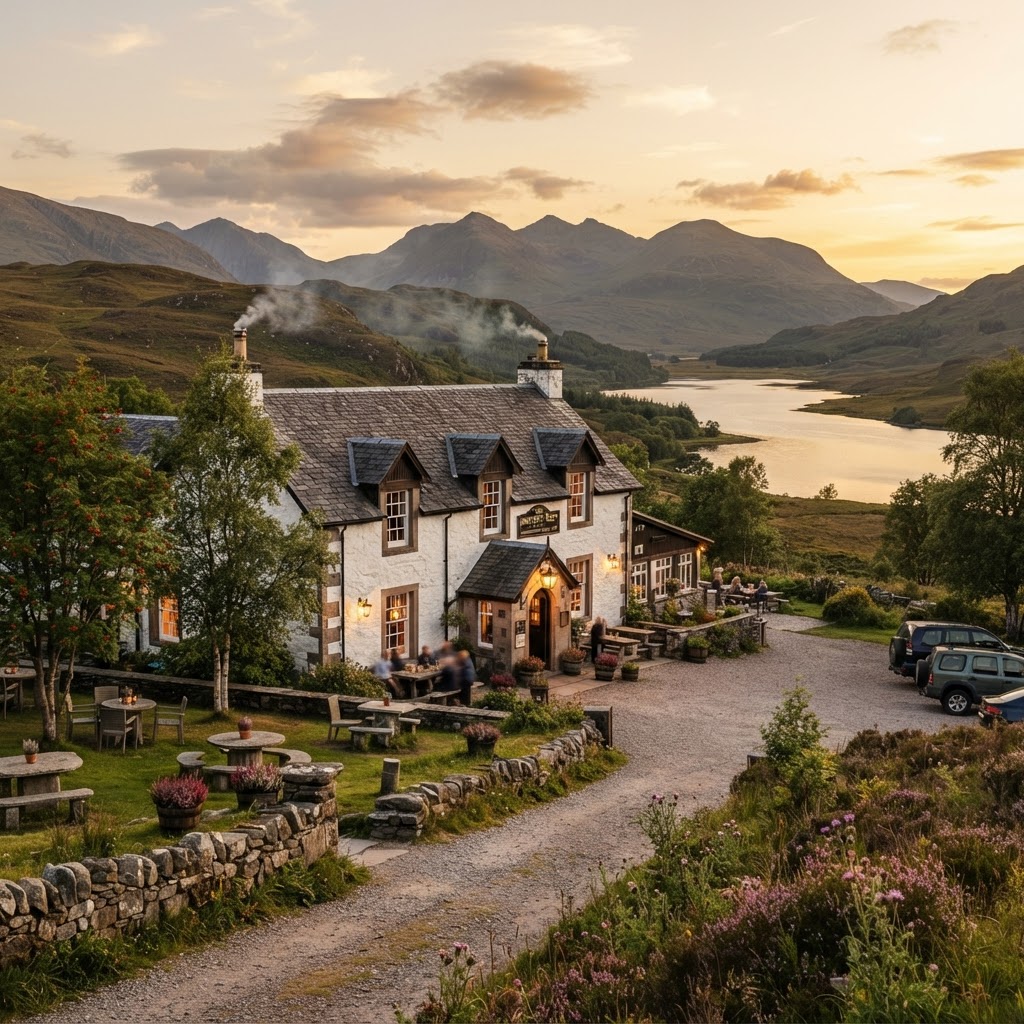
Buying a public house or inn in the Scottish Highlands represents one of the UK's most distinctive hospitality investment opportunities, combining commercial property acquisition with lifestyle aspirations in a region renowned for its tourism economy, whisky heritage, and dramatic landscapes. The Highlands pub and inn market operates under unique conditions—from seasonal trading patterns and remote locations to Scotland-specific licensing laws and community expectations—that demand specialist knowledge beyond standard commercial property transactions. This comprehensive guide examines every dimension of acquiring a Highland pub or inn, from initial market research and valuation through legal due diligence, financing structures, and post-acquisition integration. Whether you're an experienced operator seeking a lifestyle change, an investor targeting Scotland's resilient tourism sector, or a first-time buyer drawn to the region's hospitality heritage, you'll find the strategic frameworks, regulatory insights, and financial benchmarks essential for making an informed acquisition decision in this exceptional but challenging market.
Key Takeaways
- Highland pubs and inns typically trade at £300,000–£1.5 million for freehold properties, with valuation heavily influenced by accommodation capacity, tourism footfall, and accessibility rather than wet sales alone.
- Scotland's distinct licensing regime requires premises licences under the Licensing (Scotland) Act 2005, with local licensing boards wielding significant discretionary power over transfers and operating conditions.
- Seasonal trading is pronounced across the Highlands, with many properties generating 60–70% of annual revenue between May and September, demanding robust cash flow management and diversified income streams.
- Remote locations create operational challenges including staff recruitment, supply chain costs 15–25% above urban equivalents, and limited broadband infrastructure that impacts modern guest expectations.
- Community integration is critical—Highland pubs often serve as essential social infrastructure, and buyers who neglect local relationships risk reputational damage and planning/licensing obstacles.
- Financing Highland acquisitions requires lenders comfortable with seasonal hospitality models, with typical loan-to-value ratios of 60–70% and demonstrated sector experience increasingly mandatory.
- Due diligence must extend beyond standard commercial surveys to include septic systems, water supplies, heating infrastructure, and compliance with Scottish building standards that differ materially from England and Wales.
Understanding the Highland Pub and Inn Market: Property Types, Trading Models and Regional Dynamics
Defining Highland Hospitality Property Categories
The Scottish Highlands pub and inn market encompasses four distinct property types, each with unique trading characteristics:
Traditional village pubs serve local communities with wet-led operations (70–85% beverage sales), typically generating £150,000–£400,000 annual turnover. These properties anchor settlements like Beauly, Grantown-on-Spey, and Fort Augustus, with trade heavily dependent on resident populations and passing tourist traffic.
Coaching inns blend heritage appeal with accommodation (4–12 bedrooms), food-led operations (60–70% of revenue), and turnover ranging £400,000–£1.2 million. Properties along the A9 corridor and historic drovers' routes command premium positioning.
Lochside hotels and waterfront inns capitalise on Scotland's dramatic landscapes, offering 8–25 bedrooms with restaurant operations. Annual revenues typically span £600,000–£2.5 million, with 85–90% of trade concentrated in April–October. Properties on Loch Ness, Loch Lomond's northern shores, and the West Coast achieve the highest occupancy rates.
Whisky-focused establishments leverage Scotland's distillery tourism, particularly in Speyside and Islay. These properties combine accommodation, dining, and curated whisky experiences, with turnovers often exceeding £800,000 for well-positioned assets.
Regional Market Dynamics and Transaction Patterns
The Highland hospitality market demonstrates pronounced geographic variation in trading performance:
The North Coast 500 effect has transformed the market since 2015, with properties along the 516-mile route experiencing 35–60% revenue growth. Establishments in Applecross, Durness, and Lochinver now command premiums of £150,000–£300,000 above pre-NC500 valuations.
Infrastructure and Demographic Influences
Tourism infrastructure fundamentally shapes viability. Properties within 15 minutes of VisitScotland 5-star attractions (Eilean Donan Castle, Glenfinnan Viaduct, Dunrobin Castle) achieve 12–18% higher occupancy than comparable rural locations. The A9 dualling programme and improved ferry services to Skye have reduced seasonality for strategically positioned properties.
Local demographics determine wet-led sustainability. Villages with populations below 800 struggle to support traditional pub models without substantial tourist footfall. The Highland region's population density of 9 people per km² (versus Scotland's 70/km²) means most successful properties derive 60–85% of revenue from visitors rather than residents.
Market size: Approximately 650–700 trading pubs and inns operate across the Highlands, with 45–65 transactions annually representing 7–9% market turnover—slightly above the UK average of 6–7%, reflecting both opportunity and the challenges of remote trading.
Valuation Fundamentals: How Highland Pubs and Inns Are Priced and What Drives Premium Multiples
Core Valuation Methodologies for Highland Properties
EBITDA multiples remain the primary valuation framework for established Highland hospitality businesses. Current market multiples range:
- Wet-led village pubs: 2.5–3.5× EBITDA
- Food-led inns with accommodation: 4.0–5.5× EBITDA
- Destination hotels (15+ rooms): 5.5–7.0× EBITDA
- Premium waterfront/NC500 properties: 6.0–8.5× EBITDA
These multiples apply to normalised EBITDA after adjusting for owner salaries (typically £35,000–£50,000), one-off capital expenditure, and non-recurring costs. Properties with EBITDA below £40,000 often trade on Fair Maintainable Trade (FMT) assessments, where valuers project sustainable turnover under competent operation and apply sector-specific profit margins.
Freehold vs Leasehold Considerations
Freehold properties dominate the Highland market (approximately 75% of listings), commanding premiums of 25–40% over leasehold equivalents. Buyers acquire both operational business and underlying property asset, with typical freehold values breaking down as:
- Business goodwill and trade: 40–55%
- Property bricks-and-mortar: 45–60%
Leasehold opportunities typically involve tied or free-of-tie arrangements with 10–25 year terms remaining. Valuations reflect sustainable profit after rent (typically 8–12% of turnover for market-rent leases), with prices ranging £50,000–£250,000 depending on trade strength and lease security.
Location Attributes Driving Premium Valuations
Waterfront positioning commands the market's highest premiums. Properties with direct loch or sea views achieve:
- £8,000–£15,000 premium per bedroom versus inland comparables
- 15–25% higher food covers (averaging £24–£32 vs £18–£24)
- Extended season trading (March–November vs May–September)
North Coast 500 corridor placement adds measurable value. Establishments directly on the route with adequate parking (15+ spaces) trade at £180,000–£350,000 premiums versus similar properties 10+ miles off-route. Properties at natural stopping points (Applecross Pass summit, John O'Groats, Ullapool harbour) achieve the highest multiples.
Proximity to major attractions within 5-mile radius correlates with 18–30% higher valuations. Properties near Skye Bridge, Glenfinnan, or Cairngorms funicular access points benefit from 200,000–500,000 annual visitor traffic.
Benchmark Pricing Metrics Across Property Tiers
Accommodation-led properties command higher multiples because bedroom revenue delivers superior margins (65–75% gross profit) versus food (55–65%) and wet sales (50–60%). A 12-room inn generating £180,000 accommodation revenue typically achieves valuations 40–60% higher than a food-focused venue with equivalent total turnover but minimal rooms.
The Acquisition Process: From Initial Search Through Completion in Scotland's Legal Framework
The Scottish Property Buying Journey: Key Distinctions
Acquiring a Highland pub or inn follows Scotland's unique conveyancing framework, which differs fundamentally from English property law. Understanding these distinctions prevents costly delays and protects buyer interests throughout the 8–14 week transaction timeline.
Stage 1: Property Search and Initial Due Diligence (Weeks 1–3)
Prospective buyers typically engage specialist hospitality brokers and review properties via platforms including Stay4Hospitality's marketplace. Initial assessment focuses on:
- Trading accounts (minimum 3 years)
- Premises licence details and conditions
- Property title via Scotland's Land Register
- Building condition and outstanding maintenance
Critical difference: Scottish sellers provide a Home Report equivalent (for residential elements) and comprehensive business information pack upfront, enabling informed decision-making before formal offers.
Stage 2: Noting Interest and Closing Dates (Weeks 2–4)
Buyers instruct a Scottish solicitor (not licensed conveyancer—Scotland maintains solicitor-only conveyancing) to note interest with the seller's agent. This formal registration ensures notification of any closing date—Scotland's sealed-bid system where multiple interested parties submit best-and-final offers simultaneously.
Typical closing date process:
- Seller's agent sets deadline (usually 7–14 days' notice)
- Buyers submit sealed written offers via solicitors
- Seller selects preferred offer (not necessarily highest—terms and conditions matter)
- Qualified acceptance initiates missives negotiation
Strategic consideration: Approximately 40% of Highland hospitality transactions involve closing dates, particularly for well-presented properties under £750,000.
Stage 3: Missives Negotiation (Weeks 4–7)
Scottish property contracts form through exchange of missives—formal letters between solicitors establishing binding terms. Unlike English contracts requiring both parties' signatures, concluded missives create legal commitment once final acceptance is issued.
Key missives clauses for hospitality properties:
- Premises licence transfer confirmation and timeline
- Stock and inventory valuation methodology (typically independent valuer at completion)
- TUPE compliance for employee transfers
- Suspensive conditions (financing, survey, licence approval)
- Entry date (completion) typically 4–8 weeks post-conclusion
Critical timeline: Buyers should complete building surveys, licensing due diligence, and secure financing before missives conclude—withdrawal after conclusion risks forfeiting deposits and legal costs.
Stage 4: Pre-Completion Preparations (Weeks 7–11)
While solicitors handle settlement preparations (Scotland's term for completion), buyers must parallel-process:
Premises Licence Transfer Application:
- Submit to local Licensing Board (6–8 weeks processing)
- Requires personal licence holder designated as premises manager
- Application runs concurrently with conveyancing
TUPE Consultation:
- Transfer of Undertakings (Protection of Employment) regulations apply
- Existing staff transfer automatically with terms preserved
- Minimum 14-day consultation period before completion
Stock Valuation:
- Independent valuer assesses inventory 1–2 days pre-completion
- Buyer pays for stock at valuation (typically £8,000–£35,000)
- Beverages, food stores, cleaning supplies, and retail items included
Stage 5: Settlement and Entry (Week 12)
On the settlement date, solicitors exchange:
- Purchase funds via electronic transfer
- Signed disposition (deed transferring ownership)
- Keys and operational handover
Post-settlement: The disposition registers with Registers of Scotland (1–2 weeks), providing conclusive ownership evidence. Premises licence transfer typically completes within 2–4 weeks of settlement, during which the business trades under the previous licence with Board notification.
Timeline expectation: 8–12 weeks from offer acceptance to settlement represents the Highland market norm, though complex licensed premises or listed buildings may extend to 14–16 weeks.
Licensing, Planning and Regulatory Compliance: Navigating Scotland's Distinct Hospitality Framework
Premises Licence Requirements Under Scottish Law
Scotland's Licensing (Scotland) Act 2005 establishes a fundamentally different framework from England and Wales. Every Highland pub and inn must hold a premises licence issued by the local Licensing Board (Highland Council operates three boards: North, Central, and South).
Transfer process for acquisitions:
- Premises licence transfer application submitted to relevant board
- Personal licence holder must be designated as premises manager (Scottish certificate required—English personal licences invalid)
- Operating plan review confirming hours, activities, and capacity
- 21-day consultation period with Police Scotland, Environmental Health, Planning, and Building Standards
- Board determination at quarterly meeting (or delegated to officials for straightforward transfers)
Timeline: 6–10 weeks typical; 12–16 weeks if board hearing required. Critical: Buyers can trade immediately post-acquisition under the existing licence with board notification, but formal transfer must complete within prescribed period.
Personal Licence Requirements
Every premises must designate a personal licence holder as premises manager. Obtaining a Scottish personal licence requires:
- SCPLH qualification (Scottish Certificate for Personal Licence Holders)
- Licensing Standards Officer interview
- Criminal records check via Disclosure Scotland
- Application to any Scottish Licensing Board (£200 fee)
Processing time: 8–12 weeks. Buyers without existing Scottish personal licences should begin applications 3–4 months before anticipated completion.
Overprovision Assessments and New Licence Applications
If acquiring a property without existing premises licence (rare for established pubs, but occurs with conversions), buyers face overprovision assessments. Highland Licensing Boards evaluate whether additional licensed premises would create oversupply in the locality.
Current overprovision status: Most Highland settlements show no overprovision for on-sales premises, though Inverness city centre faces restrictions for certain licence types. Board policy statements (reviewed every 3–5 years) provide definitive guidance.
Planning Permission and Change of Use Considerations
When planning permission becomes necessary:
- Converting non-hospitality buildings to pub/restaurant use
- Significant external alterations (extensions, outdoor seating areas)
- Changing use from pub to hotel (accommodation increase beyond ancillary use)
- Installing external extraction systems or refrigeration units
Class 3 (Food and Drink) covers pubs and restaurants under Scottish planning use classes. Most operational changes within this class don't require permission, but material intensification (substantially increased capacity or hours) may trigger requirements.
Listed Building and Conservation Area Controls
Approximately 35–40% of Highland pubs and inns occupy listed buildings or conservation areas, requiring additional consents:
Listed Building Consent needed for:
- Internal alterations affecting character (removing walls, altering room layouts)
- External changes (signage, windows, roofing materials)
- Installation of services (soil pipes, flues, cabling)
Processing: 8–12 weeks for standard applications; 16–24 weeks for Category A listings. Highland Council's Historic Environment Team provides pre-application advice (recommended for complex projects).
Food Safety and Environmental Health Registration
Food hygiene registration with Highland Council Environmental Health is mandatory before serving food:
- Online registration at least 28 days before opening
- Food Safety Management System (HACCP-based) required
- Initial inspection within 6 months of registration
- Food hygiene rating (Pass/Improvement Required/Urgent Improvement Required)
Highland-specific considerations: Properties with private water supplies (approximately 15% of rural Highland premises) require separate registration and quarterly testing. Private drainage systems need SEPA (Scottish Environment Protection Agency) authorisation and annual maintenance verification.
Short-Term Let Licensing for Accommodation
Scotland's short-term let licensing scheme (mandatory from October 2022) applies to properties offering accommodation for fewer than 28 consecutive days. Highland pubs and inns with letting rooms must hold:
Secondary short-term let licence if:
- Operating accommodation alongside primary business
- Rooms available for booking under 28-day periods
Exemptions: Traditional hotels and B&Bs operating year-round with on-site management typically exempt, but case-by-case assessment required.
Application: £389 per property; includes safety inspections covering fire detection, electrical safety, and gas certificates. Processing: 8–12 weeks; existing properties had transition period through 2023–2024.
Compliance Timeline for New Owners
Immediate priorities (Day 1–30):
- Notify Licensing Board of ownership change
- Register food business with Environmental Health
- Confirm insurance coverage (public liability minimum £5 million)
First 90 days:
- Complete premises licence transfer
- Conduct fire risk assessment review
- Update Health & Safety policy documentation
- Register with HMRC for VAT and PAYE
First 6 months:
- Achieve food hygiene inspection
- Complete any outstanding building/planning compliance
- Review and renew trade waste contracts and environmental permits
Financing Your Highland Pub Purchase: Lending Structures, Deposit Requirements and Alternative Capital Sources
How Lenders Assess Highland Hospitality Properties
Specialist hospitality lenders apply distinct risk assessment criteria when evaluating Scottish Highlands pub and inn acquisitions compared to urban counterparts. Banks typically require a minimum three-year trading history demonstrating consistent performance, with particular scrutiny on seasonal adjustment factors—lenders expect to see evidence that winter months (November–March) generate sufficient cash flow to cover fixed costs, or that reserves exist to bridge lean periods.
Key lending criteria include:
- Debt service coverage ratio (DSCR) of minimum 1.25:1, calculated on normalized earnings
- Personal guarantees from all directors/partners (standard for acquisitions under £2 million)
- Evidence of hospitality management experience (minimum 2–3 years in similar environments)
- Proof of year-round trading capability or demonstrated shoulder-season revenue strategies
Deposit Expectations and Loan-to-Value Ratios
First-time operators should anticipate deposit requirements of 30–40% of purchase price, with experienced hospitality professionals occasionally securing terms at 25–30%. For a £650,000 Highland inn, expect to provide £195,000–£260,000 in equity. Properties with substantial accommodation capacity (6+ letting rooms) often command more favourable terms, as lenders recognize diversified revenue streams reduce seasonal vulnerability.
Interest rate margins typically range from 3.5–6% above base rate, influenced by:
Alternative Capital Structures
Bank finance remains the primary route, with Barclays, NatWest, and specialist lenders like Christie Finance offering Highland-specific products. However, alternative structures increasingly fill gaps:
Vendor finance: Retiring operators may accept 10–20% deferred payment over 2–3 years, particularly beneficial when buyers lack full deposit but demonstrate operational competence. Typical terms involve 6–8% interest on the deferred portion.
Private equity partnerships: Regional hospitality investment groups occasionally co-invest in Highland properties showing strong tourism potential, typically requiring 20–30% operator equity and taking minority stakes (25–40%) with defined exit terms after 5–7 years.
Asset-backed lending: For properties with substantial land or development potential, specialist lenders may advance against asset value rather than trading performance, useful for renovation-focused acquisitions but carrying higher rates (6–9%).
Optimizing Your Lending Position
Successful applicants strengthen proposals by demonstrating weather-resilient revenue strategies (corporate bookings, wedding/events capacity, walking/cycling tourism shoulder-season appeal), presenting detailed 36-month cash flow projections with conservative seasonal assumptions, and evidencing relationships with regional tourism bodies that drive year-round footfall. Properties within NC500 catchment or near Cairngorms National Park infrastructure typically receive more competitive terms due to proven visitor demand patterns.
Operational Realities: Seasonal Trading, Staffing Challenges and Cost Structures in Remote Locations
Understanding Highland Revenue Curves
Highland pubs and inns experience pronounced seasonal variation, with summer months (June–August) generating 45–60% of annual accommodation revenue and 35–45% of food/beverage turnover. Successful operators maintain minimum cash reserves equivalent to 4–5 months' fixed costs (typically £25,000–£45,000 for mid-sized establishments) to navigate November–February trading when weekly revenues may drop 60–70% from peak levels.
Typical monthly revenue distribution for a 10-room Highland inn:
- Peak season (Jun–Aug): £35,000–£50,000/month
- Shoulder season (Apr–May, Sep–Oct): £18,000–£28,000/month
- Winter (Nov–Mar): £8,000–£15,000/month
- Critical period (Jan–Feb): £6,000–£10,000/month
Staffing Solutions in Limited Labour Markets
Recruitment challenges represent the single greatest operational barrier in remote Highland locations. Villages with populations under 500 offer minimal local labour pools, forcing operators to implement creative solutions:
Staff accommodation provision: Properties without integrated staff housing face severe disadvantages. Converting outbuildings, providing caravans, or partnering with local landlords for guaranteed rental accommodation becomes essential. Budget £8,000–£12,000 annually per housed staff member.
Seasonal worker programmes: EU Settlement Scheme changes have complicated traditional Eastern European recruitment channels. Successful operators now utilize:
- Youth Mobility Visa holders (Australia, New Zealand, Canada)
- University placement students (hospitality management courses)
- Working holidaymakers attracted through platforms like Workaway (providing accommodation/meals in exchange for 25–30 hours weekly)
Couples recruitment: Hiring partnerships (chef + front-of-house, or housekeeping + maintenance) with accommodation provision improves retention and reduces per-person housing costs.
Supply Chain Economics and Utility Realities
Remote locations incur cost premiums of 15–25% on food and beverage supplies compared to central belt equivalents. Weekly delivery logistics from Inverness or Fort William add surcharges, while minimum order values force inventory management challenges.
Utility cost structures differ fundamentally from urban properties:
- Heating: Oil or LPG systems (no mains gas) cost £4,000–£8,000 annually for properties 300–500m²
- Water: Private supplies require treatment systems (£1,500–£3,000 annual maintenance) and regular quality testing
- Waste: Septic tank servicing (£200–£400 per emptying, 2–4 times annually)
- Electricity: Often single-phase supply with upgrade costs of £15,000–£40,000 for three-phase if expanding kitchen capacity
Building Year-Round Revenue Resilience
Operators achieving sustainable profitability implement multi-stream strategies:
Local trade cultivation: Establishing community hub status through quiz nights, live music (monthly rather than weekly to maintain novelty), and becoming the de facto meeting venue for local groups generates consistent baseline revenue.
Corporate and contractor markets: Renewable energy projects, forestry operations, and infrastructure maintenance create demand for mid-week accommodation and meal packages.
Events programming: Wedding packages (£8,000–£15,000 per event), outdoor activity group bookings (cycling, hiking, fishing parties), and seasonal celebrations (Hogmanay, Burns Night) fill shoulder periods.
Digital connectivity limitations (many areas lack reliable 4G, fiber broadband unavailable) require investment in satellite broadband (£150–£300/month) or 4G signal boosters to meet guest expectations and enable online booking systems.
Due Diligence Essentials: Critical Investigations Beyond Standard Commercial Property Surveys
Highland-Specific Structural and Environmental Surveys
Standard commercial property surveys prove insufficient for Highland pub acquisitions, where traditional stone construction, extreme weather exposure, and rural infrastructure demand specialized investigation. Engage surveyors with demonstrable Highland hospitality experience—generic commercial valuers frequently underestimate remediation costs for issues unique to these environments.
Critical structural assessments must address:
Stone construction integrity: Many Highland inns feature 18th–19th century rubble-stone walls with lime mortar. Survey should identify cement repointing (traps moisture, causes stone deterioration), cavity wall tie corrosion in later additions, and lintel condition above openings. Remediation costs: £15,000–£45,000 for comprehensive repointing of 300m² building.
Roof condition in high-rainfall/wind zones: Annual rainfall exceeding 2,000mm and wind exposure necessitate detailed inspection of slate condition, sarking boards, felt underlays, and valley/flashing details. Budget £35,000–£85,000 for complete re-roofing of typical two-story inn with 400m² footprint.
Rising damp and drainage: Properties built pre-1920 often lack damp-proof courses. External ground levels, drainage channels, and downpipe discharge points require verification. French drains and tanking solutions cost £8,000–£25,000.
Private Utilities and Environmental Compliance
Water supply verification represents a critical due diligence component where properties rely on private sources:
- Bacteriological testing: Coliform and E.coli analysis (£150–£250)
- Chemical analysis: pH, nitrates, metals, pesticides (£300–£500)
- Flow rate assessment: Minimum 20 liters/minute for 10-room operation
- Treatment system inspection: UV filters, softeners, storage tank capacity and condition
Failure to meet Private Water Supply (Scotland) Regulations 2006 standards may require £5,000–£15,000 investment in filtration/treatment upgrades.
Septic tank and drainage systems require:
- Tank capacity verification (minimum 2,880 liters for 10-person capacity, plus 180 liters per additional person)
- Soakaway functionality testing during wet season
- Compliance with SEPA discharge consents if any effluent reaches watercourses
- Upgrade to modern treatment plants (£8,000–£18,000) may be necessary for expansion plans
Heating, Energy and Building Standards
Heating system capacity assessment must evaluate:
- Oil/LPG tank condition, capacity (minimum 2,500-liter for year-round operation), and bund compliance
- Boiler age and efficiency (replacement cost: £6,000–£12,000 for commercial systems)
- Distribution system adequacy for accommodation wings
- Fuel consumption records: Request three years of delivery invoices to verify operating costs
Scottish building standards differ from English regulations, particularly regarding fire safety, accessibility, and energy performance. Properties requiring change of use permissions or material alterations must comply with current standards—costs frequently exceed £30,000 for fire alarm upgrades, emergency lighting, and fire door installations.
EPC requirements: Commercial hospitality properties require minimum rating; buildings below E rating face rental/sale restrictions from 2023. Improvement measures (insulation, glazing, heating controls) cost £15,000–£60,000.
Licensing and Historical Compliance Verification
Premises licence review should confirm:
- Accommodation licensing compliance (if 6+ guests or any shared facilities)
- Food hygiene rating verification and inspection history
- Planning conditions attached to previous extensions/alterations
- Building warrant records for all structural changes
- Historical licensing conditions that may restrict trading hours or entertainment
Business interruption risk assessment: Review insurance claims history for weather-related access issues, flooding, or storm damage. Properties on single-track roads with river crossings or avalanche/landslip exposure require specific policy provisions costing 15–30% premium over standard rates.
Post-Acquisition Strategy: Integration, Community Positioning and Building Sustainable Highland Hospitality Businesses
The Critical First Six Months: Community Integration
Highland pub success depends fundamentally on community acceptance and local patronage, which provides revenue stability during tourist low seasons and determines long-term viability. New owners face inherent suspicion—villages often view incomers as temporary opportunists who'll abandon the community when profitability disappoints.
Essential community engagement actions within first 90 days:
- Individual relationship building: Visit every local business, introduce yourself to community council members, attend church services or community events regardless of personal beliefs
- Continuation of traditions: Maintain existing quiz nights, darts teams, local supplier relationships, and charity fundraising commitments before implementing changes
- Visible local spend: Prioritize Highland suppliers even when costlier—community notices where money flows
- Employment of local staff: Even part-time positions for locals demonstrate commitment and generate goodwill
- Facility sharing: Offer space for community groups (book clubs, craft groups, business networking) at minimal or no charge
Common fatal errors: Immediate price increases, discontinuing "unprofitable" local events, importing all staff from outside the area, and implementing London-style concepts without local consultation.
Staff Retention and Operational Culture Development
Highland hospitality staff turnover averages 40–60% annually, significantly higher than urban equivalents. Retention strategies delivering measurable results include:
Structured development pathways: Create clear progression routes from junior positions to supervisor/management roles with defined skill acquisition and wage increases (£0.50–£1.00/hour increments at 6-month intervals).
Quality of life provisions:
- Guaranteed consecutive days off (not split across week)
- Accommodation quality: Provide proper heating, WiFi, private bathrooms where possible—not basement storage conversions
- Transport solutions: Shared vehicles or mileage reimbursement for shopping trips to nearest town
- Integration support: Introduce new staff to local community, facilitate social connections beyond workplace
Seasonal staff transition planning: Offer return guarantees for following season, maintain contact during off-season, provide references supporting visa applications.
Digital Presence and Tourism Discovery Optimization
Highland properties must maximize visibility across multiple discovery platforms due to dispersed tourist planning behaviors:
Platform-specific optimization priorities:
Direct booking incentive structures: Offer 10–15% discount versus OTA rates, flexible cancellation, room upgrades, or dining credits to shift bookings away from commission-heavy platforms.
Yield Management and Revenue Stream Diversification
Dynamic pricing implementation increases accommodation revenue 15–25% annually:
- Peak weekends (Jul–Aug, bank holidays): Premium rates 40–60% above base
- Shoulder midweek: Base rate minus 10–15%
- Winter weekends: Base rate minus 20–30%
- Last-minute inventory (within 48 hours): Aggressive discounting via flash-sale platforms
Weather-resilient revenue development:
Corporate partnerships: Establish preferred-supplier agreements with renewable energy developers, estate management companies, and government agencies requiring regular accommodation (£15,000–£35,000 annual contract value).
Events infrastructure: Invest in marquee partnerships, AV equipment, and wedding coordination capability—each wedding generates £8,000–£15,000 revenue with 70–80% gross margin.
Regional tourism network participation: Active involvement in Visit Scotland, NC500 marketing groups, and local Destination Management Organizations provides cooperative marketing reach and referral networks. Membership costs (£300–£1,200 annually) return 8–12× value through qualified referrals.
Financial Controls and Sustainability Systems
Establish weekly financial discipline from day one:
- Daily banking and reconciliation: Prevent cash flow opacity
- Weekly P&L review: Identify cost variances before they compound
- Monthly rolling 12-month forecast: Update based on booking patterns
- Quarterly covenant compliance checks: Ensure lending agreement adherence
- Separate reserve account: Automatically transfer 15–20% of peak-season revenue for winter cash flow coverage
Successful Highland operators achieve sustainable EBITDA margins of 18–28% after 24–36 months, with owner-operators drawing £35,000–£65,000 annually while building equity in appreciating assets within one of Britain's most spectacular and rewarding hospitality environments.
What deposit do I need to buy a pub or inn in the Scottish Highlands?
Most specialist hospitality lenders require 25-35% deposit for Highland pub purchases, higher than standard commercial property due to perceived location risk a
Can I buy a Scottish Highland pub if I'm not a UK resident?
Yes, international buyers can purchase Highland pubs without residency restrictions, though financing proves significantly more challenging. UK banks rarely len
How long does the pub buying process take in Scotland compared to England?
Scottish property transactions typically complete faster than England—averaging 8-12 weeks versus 12-16 weeks—due to Scotland's more structured legal system. Th
What are the ongoing costs of running a remote Highland pub beyond the mortgage?
Remote Highland pubs face elevated operating costs significantly impacting profitability. Expect utilities 40-60% higher than urban equivalents due to oil heati
Do I need hospitality experience to get a mortgage for a Highland pub?
While not legally required, hospitality experience dramatically affects mortgage availability and terms. Lenders typically categorise applicants into three tier
What happens to existing staff when I buy a Highland pub?
TUPE regulations (Transfer of Undertakings Protection of Employment) automatically transfer existing employees to new ownership when buying a trading pub as a g
Can I convert part of a Highland pub to private residential accommodation?
Converting pub areas to private residential use requires planning permission (change of use from Class 2 to residential) and often proves contentious in Highlan
What are the tax implications of buying a pub in Scotland versus England?
Scottish pub purchases face Land and Buildings Transaction Tax (LBTT) rather than SDLT, with different thresholds and rates. LBTT on non-residential property (i
Related Resources
- Scottish Highlands Hotel Valuation: How Location, Seasonality and Trading History Affect Price
- Understanding Scots Law in Hotel Sales: Missives, LBTT and the Scottish Conveyancing Process
- Highland Hotel Buyer Profiles 2026: Who's Investing in Scottish Rural Hospitality and Why
- Seasonal Trading Models for Highland Hotels: Presenting Winter Closures and Revenue Forecasts to Buyers
- Browse Highland Hospitality Properties for Sale
Browse hospitality properties for sale | List your property | Free valuation