Koop een Bed and Breakfast in Drumnadrochit | Volledige Koopprocesgids
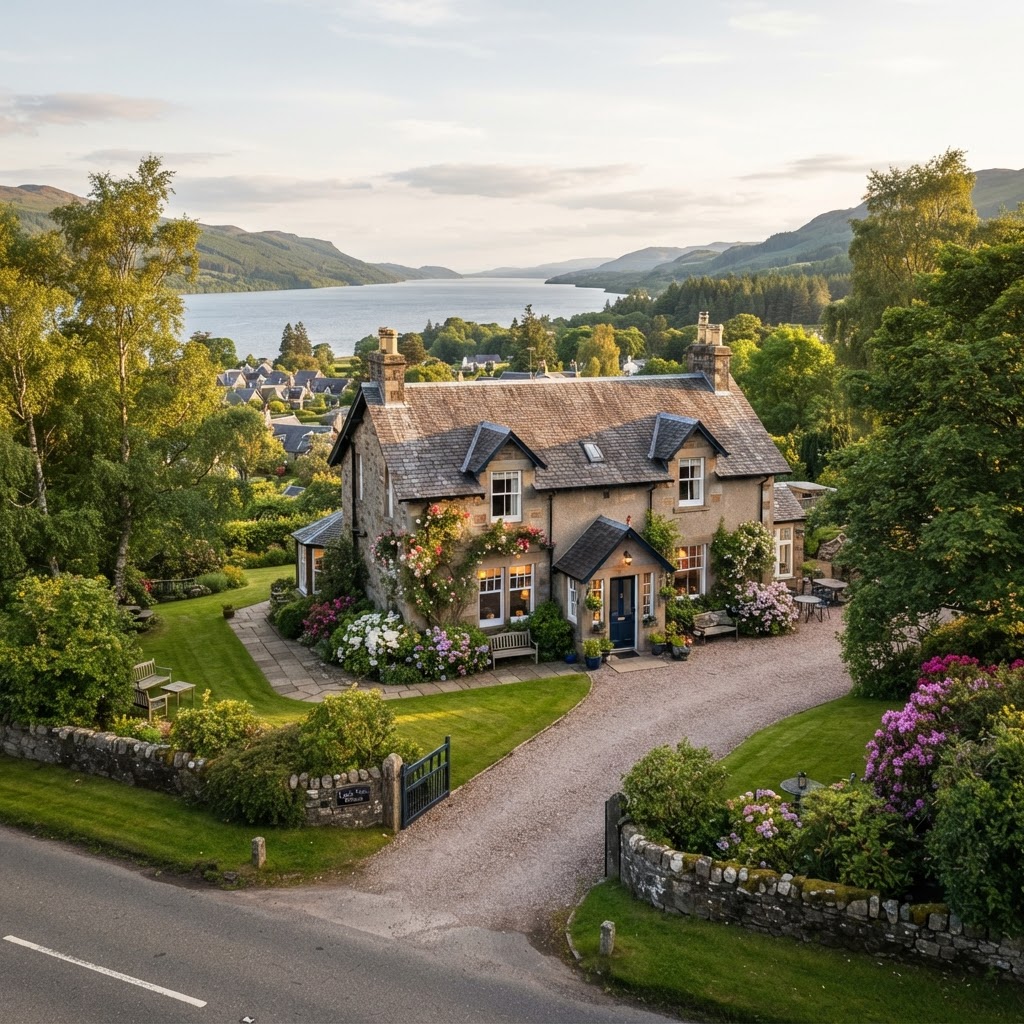
Buying a bed and breakfast in Drumnadrochit places you at the heart of one of Scotland's most visited tourist corridors, where Loch Ness mystique meets Highland hospitality. This picturesque village on the western shore of Loch Ness attracts over 400,000 visitors annually, creating year-round demand for authentic Scottish accommodation experiences. Whether you're a first-time hospitality investor or an experienced operator seeking a lifestyle business in the Highlands, acquiring a B&B in Drumnadrochit requires navigating unique market dynamics, seasonal revenue patterns, and Scottish property regulations. This complete buyer's guide walks you through every stage of the acquisition process—from understanding the local market and evaluating properties to securing finance, completing due diligence, and launching successful operations in one of Scotland's most iconic tourism destinations.
Key Takeaways
- Drumnadrochit's position on the Loch Ness tourist trail generates strong seasonal demand from April to October, with occupancy rates typically exceeding 85% during peak summer months.
- B&B properties in the area typically range from £350,000 to £850,000 depending on size, condition, and proximity to key attractions like Urquhart Castle and Loch Ness.
- Scottish property law requires additional legal steps including Home Report compliance, potential crofting law considerations, and Highland Council planning permissions for commercial use.
- Successful Drumnadrochit B&Bs diversify revenue through winter closures, corporate bookings, and partnerships with Loch Ness tour operators and whisky trail organisers.
- Buyers must budget for higher-than-average utility costs due to Highland location, older stone buildings, and the need for robust heating systems in Scotland's climate.
- The local market favours operators who embrace Scottish heritage, offer authentic Highland experiences, and maintain strong relationships with regional tourism boards.
- Financing options include traditional commercial mortgages, Scottish tourism development grants, and VisitScotland Quality Assurance scheme benefits that can improve lending terms.
Understanding the Drumnadrochit B&B Market: Location, Tourism Dynamics and Investment Fundamentals
Strategic Position in Scotland's Tourism Corridor
Drumnadrochit occupies a uniquely advantageous position in the Scottish hospitality landscape. Situated on the western shore of Loch Ness, approximately 14 miles southwest of Inverness, this village serves as the gateway to one of Scotland's most iconic attractions. The settlement sits at the intersection of the A82—the primary route connecting Fort William to Inverness—and the A831 to Glen Affric, positioning it as an essential stopover point for multiple tourist routes including the increasingly popular North Coast 500.
Visitor Demographics and Seasonal Patterns
The Drumnadrochit B&B market serves a distinctly varied guest profile compared to urban Scottish hospitality:
- International tourists (45-55%): Predominantly North American, German, French and Japanese visitors seeking the Loch Ness experience
- Domestic Scottish travellers (20-25%): Weekend breaks and staycations, particularly from central belt cities
- North Coast 500 drivers (15-20%): Multi-day road trippers requiring overnight accommodation
- Special interest groups (10-15%): Hikers (Great Glen Way), cyclists, wildlife photographers and genealogy tourists
Seasonal dynamics in Drumnadrochit follow predictable Highland patterns with crucial nuances:
Competitive Landscape and Business Models
The Drumnadrochit accommodation market comprises approximately 30-35 B&B properties alongside hotels, self-catering cottages and a campsite. The B&B sector divides into three distinct tiers:
Traditional Highland B&Bs (60% of market): 3-5 bedrooms, owner-operated, shared breakfast room, £80-£100 per room. These properties typically operate March-October, generating £35,000-£55,000 annual revenue with EBITDA margins of 35-45% for hands-on owners.
Boutique/Premium B&Bs (25% of market): 4-6 en-suite rooms, contemporary interiors, emphasis on local sourcing, £120-£165 per room. Year-round or extended season operation (February-November), generating £65,000-£95,000 with margins of 40-50% due to higher ADR offsetting increased operating costs.
Hybrid models (15% of market): B&B with self-catering annexe, holiday let component, or small restaurant/tearoom. Revenue £70,000-£120,000 with more complex operational requirements but diversified income streams.
Investment Fundamentals Unique to This Micro-Market
Drumnadrochit presents distinct characteristics that differentiate it from broader Scottish Highlands investments:
Location dependency: Properties within 800 metres of Loch Ness shoreline or with direct loch views command 25-40% premium valuations and sustain 10-15 percentage points higher occupancy. Distance from the A82 corridor beyond 2 miles significantly impacts discoverability and walk-in trade.
Attraction proximity effect: The village hosts two major Loch Ness visitor centres (Nessieland and Loch Ness Centre & Exhibition), generating substantial passing trade that benefits centrally-located B&Bs. Properties within 400 metres of these attractions report 20-30% higher direct booking rates.
Infrastructure considerations: Unlike urban markets, Drumnadrochit properties frequently operate on private water supplies, septic drainage systems and oil heating—factors that materially impact operating costs (£3,500-£6,000 annually) and require specific due diligence expertise.
Planning and expansion potential: Highland Council's rural business policies generally support sensitive expansion of existing hospitality businesses. Properties with land may offer development opportunities for additional rooms, self-catering units or amenities, though conservation area restrictions apply in the village centre.
The Drumnadrochit market has demonstrated resilient capital appreciation of 4-7% annually over the past decade, outperforming many rural Scottish markets due to sustained Loch Ness tourism demand and limited new supply.
Step-by-Step Process: How to Find, Evaluate and Acquire a B&B in Drumnadrochit
Phase 1: Market Research and Search Strategy (Weeks 1-4)
Begin your acquisition journey by establishing comprehensive search coverage across specialist channels:
Primary listing platforms:
- Stay4Hospitality: Filter for Scottish Highlands B&Bs; set alerts for Drumnadrochit and surrounding postcodes (IV63, IV3)
- Daltons Business: Scotland's leading hospitality broker; maintains relationships with sellers before public listing
- ASG Commercial: Strong Highland presence; often handles premium properties
- Christie & Co: Occasional Loch Ness area listings; institutional-quality opportunities
Secondary sources: Local estate agents (Strutt & Parker Inverness, Galbraith), VisitScotland networking events, Highland Hospitality Association contacts, and direct approaches to properties showing age/succession indicators (older owners, dated websites, declining review scores).
Define your buyer criteria with Highland-specific parameters:
- Minimum/maximum room count (sweet spot: 4-6 rooms for lifestyle buyers)
- Seasonal vs. year-round operation preference
- Acceptable property age and condition (Victorian/Edwardian properties common; require budget for ongoing maintenance)
- Essential features (loch views, private parking, owner accommodation configuration)
- Maximum distance from village centre or A82 corridor
- Investment budget including 15-20% acquisition cost buffer
Phase 2: Property Evaluation and Viewing Process (Weeks 4-8)
Arrange strategic viewings during operational periods (April-September optimal) to observe:
- Guest interactions and service delivery standards
- Breakfast service efficiency and kitchen workflows
- Actual room presentation vs. marketing photographs
- Property maintenance standards and deferred maintenance indicators
- Owner's operational involvement and potential staff dependencies
Critical evaluation checklist for each viewing:
- Trading verification: Request occupancy data for past 36 months, breakdown of booking channels (direct vs. OTA), repeat guest percentage, and average length of stay
- Online reputation audit: Analyse 200+ most recent TripAdvisor reviews, Booking.com scores, Google ratings—identify recurring complaints or operational issues
- Physical property assessment: Roof condition, window quality (single vs. double glazing), heating system age, electrical installation compliance, fire safety systems
- Utilities infrastructure: Water source (mains vs. private supply), drainage (mains vs. septic), heating fuel (oil, LPG, electric), broadband speed (critical for guest satisfaction)
- Regulatory compliance: Current Food Hygiene Rating, VisitScotland Quality Assurance grading, fire risk assessment documentation, EPC rating
Phase 3: Offer Strategy and Negotiation (Weeks 8-10)
The Scottish property market operates differently from England and Wales:
Offers process: In Scotland, properties may be marketed at "offers over" (expect to bid 5-10% above asking) or fixed price (room for 3-5% negotiation). Submit offers through a Scottish solicitor—verbal offers carry no weight.
Negotiation leverage points:
- Seasonal trading gaps or declining year-on-year performance
- Deferred maintenance requirements (re-roof, heating replacement, room refurbishments)
- Outdated booking systems or weak online presence
- Restrictive owner financing requirements or urgent sale timelines
Typical offer structure: Purchase price plus "entry date" (completion target), included items (furniture, fixtures, equipment, website, booking system, intellectual property), and conditions (subject to survey, accounts verification, satisfactory due diligence).
Phase 4: Scottish Conveyancing and Completion (Weeks 10-18)
The Scottish conveyancing process follows distinct procedures:
Immediate post-offer acceptance:
- Instruct commercial property survey (£1,500-£3,500 depending on property size)
- Solicitor conducts title examination, planning history search, environmental searches
- Accountant reviews three years of trading accounts, tax returns, VAT records
- Arrange commercial mortgage valuation if financing (£800-£1,200)
Missives period (weeks 11-15): Your solicitor and the seller's solicitor exchange formal letters (missives) negotiating contract terms. Unlike England, missives are legally binding once concluded—no gazumping risk.
Pre-completion requirements:
- Finalise commercial mortgage offer (4-6 weeks from application)
- Transfer deposit to solicitor's client account (typically 10% on conclusion of missives)
- Arrange business insurance effective from entry date
- Plan handover period with seller (1-2 weeks shadowing recommended)
- Notify VisitScotland, Highland Council, suppliers of ownership change
Settlement and entry: On the agreed entry date, balance funds transfer, title registers with Registers of Scotland, and keys exchange. Timeline expectation: 12-16 weeks from offer acceptance to completion for straightforward transactions; complex deals or financing delays can extend to 20-24 weeks.
Financial Planning and Valuation: What B&Bs Cost in Drumnadrochit and How to Fund Your Purchase
Current Market Valuations and Price Drivers
Drumnadrochit B&B valuations as of 2024 range from £395,000 to £875,000, with pricing primarily determined by:
Critical valuation factors specific to this market:
Loch views premium: Direct, unobstructed Loch Ness views from guest rooms add £80,000-£140,000 to valuation. Properties marketed with "loch view" command 15-20% higher ADR and sustain occupancy 8-12 percentage points above non-view equivalents.
Room count economics: The 4-6 room range represents the optimal scale for owner-operators—sufficient revenue to provide £45,000-£75,000 owner earnings while remaining manageable without permanent staff. Properties with 3 or fewer rooms struggle to generate viable returns; 7+ rooms typically require employed help, compressing margins.
Condition and capital expenditure: Victorian and Edwardian properties (common in Drumnadrochit) require ongoing maintenance budgets of £8,000-£15,000 annually. Deferred maintenance (roof replacement £25,000-£45,000, heating system £12,000-£18,000, full room refurbishment £8,000-£12,000 per room) should be reflected in purchase price negotiations.
Trading history quality: Properties demonstrating consistent year-on-year growth, occupancy above 65% annually, and EBITDA margins exceeding 40% command premium multiples. Declining performance, over-reliance on single booking channels, or poor online ratings (below 4.0/5.0) warrant 15-25% valuation discounts.
Comprehensive Acquisition Cost Breakdown
Beyond the purchase price, budget for substantial additional costs:
Professional fees and taxes:
- Legal fees (Scottish solicitor): £3,500-£6,500 depending on transaction complexity
- Commercial property survey: £1,500-£3,500 (essential for older Highland buildings)
- Accountant's due diligence: £1,200-£2,500 for financial verification
- Land and Buildings Transaction Tax (Scottish SDLT): 0% up to £150,000, then 1% to £250,000, 5% to £325,000, 10% thereafter (non-residential rates apply)
- Mortgage arrangement fees: 1-2% of loan value if financing
Example LBTT calculation for £595,000 purchase:
- £0-£150,000: £0
- £150,001-£250,000: £1,000
- £250,001-£325,000: £3,750
- £325,001-£595,000: £27,000
- Total LBTT: £31,750
Working capital requirements: Reserve £25,000-£45,000 for:
- Initial stock and supplies (linen, toiletries, food inventory)
- Marketing and website updates (£3,000-£6,000)
- Minor refurbishments or immediate repairs
- Cash flow buffer for first season (particularly if purchasing off-season)
- Utility deposits and insurance premiums
Total acquisition costs typically add 18-24% to purchase price for cash buyers, 22-28% when financing.
Financing Options and Deposit Requirements
Commercial mortgages remain the primary funding route:
Typical terms for Drumnadrochit B&Bs:
- Deposit requirement: 30-40% (£150,000-£270,000 for mid-market property)
- Interest rates: 5.5-7.5% (as of 2024, variable by lender and borrower profile)
- Term: 15-25 years, often with capital repayment schedules
- Lending criteria: Minimum 2 years hospitality experience or industry background; demonstrated management capability; satisfactory credit history
Specialist hospitality lenders: Handelsbanken, Metro Bank, Aldermore, and Scottish regional banks (Bank of Scotland, Clydesdale) offer products tailored to small hospitality businesses. Expect 8-12 week approval timelines and detailed business plan requirements.
Alternative financing routes:
Scottish Development Loans: Scottish Enterprise and Highlands and Islands Enterprise occasionally offer co-investment loans for tourism businesses demonstrating growth potential or sustainability initiatives. Typical terms: £50,000-£150,000 at preferential rates (3-5%), requiring matched private investment.
VisitScotland Growth Fund: Grants and loans for quality improvements, sustainability measures, digital capability. Not acquisition funding but valuable for post-purchase enhancement projects (£10,000-£100,000 range).
Vendor financing: Some sellers, particularly those retiring, may offer partial vendor loans (10-20% of purchase price) to facilitate sale, especially for buyers with strong hospitality credentials but limited deposit capacity.
Creating Realistic Financial Projections
Base your investment model on conservative Highland trading assumptions:
Revenue projection methodology:
- Year 1: Assume 85-90% of seller's reported revenue (transition period impact)
- Occupancy: 60-65% annually for established properties (70-75% peak season, 35-45% shoulder, 20-30% winter if operating)
- ADR growth: 2-3% annually (inflation-linked)
- Direct booking shift: Potential to increase direct bookings from typical 30-35% to 45-55% over 3 years, improving margins by reducing OTA commissions
Operating expense benchmarks for Drumnadrochit:
- Cost of sales (breakfast, supplies): 8-12% of revenue
- Utilities (oil heating significant factor): 10-14% of revenue
- Marketing and OTA commissions: 12-18% of revenue
- Maintenance and repairs: 6-10% of revenue
- Insurance, licenses, professional fees: 3-5% of revenue
- Owner salary (if drawing): £25,000-£40,000
Target returns: Well-operated Drumnadrochit B&Bs should deliver 12-18% cash-on-cash return on equity invested, combining operational cash flow with modest capital appreciation in this supply-constrained, high-demand micro-market.
Due Diligence Essentials: Investigating Property, Business Performance and Local Compliance
Financial and Trading Performance Verification
Comprehensive accounts analysis forms the foundation of effective due diligence:
Request and scrutinise:
- Three years of full accounts (profit & loss, balance sheet, cash flow statements)
- Monthly trading summaries showing seasonal patterns and year-on-year trends
- Detailed breakdown of revenue by source (direct bookings, Booking.com, Expedia, other OTAs)
- Guest database size and repeat booking percentage (healthy B&Bs: 20-30% repeat guests)
- Average booking lead time (indicates marketing effectiveness and demand strength)
Critical financial health indicators:
Revenue consistency: Scrutinise year-on-year revenue changes. Declining revenue (>5% annually) requires explanation—market-wide issue, increased competition, deteriorating reputation, or owner neglect. Red flag: Revenue decline combined with static or increasing expenses suggests operational problems.
Occupancy verification: Cross-reference claimed occupancy against booking system data, laundry records, and breakfast supply purchases. Calculate: (Total room nights sold ÷ Available room nights) × 100. Highland B&Bs claiming >75% annual occupancy warrant particular verification—exceptional performance or potential misrepresentation.
Profit margin analysis: EBITDA margins below 35% for owner-operated B&Bs indicate inefficiency, over-staffing, or revenue underperformance. Investigate expense categories exceeding benchmarks—particularly utilities (should be 10-14%), marketing (12-18%), and maintenance (6-10%).
Cash flow seasonality: Request monthly cash flow statements to understand working capital requirements. Drumnadrochit properties typically generate 65-75% of annual revenue April-September, creating cash flow challenges October-March. Verify adequate reserves or off-season income sources.
Online Reputation and Digital Presence Audit
Systematic review of digital footprint reveals operational quality and hidden issues:
TripAdvisor deep analysis (minimum 200 recent reviews):
- Overall rating trajectory (improving, stable, or declining)
- Response rate and quality to negative reviews (indicates owner engagement)
- Recurring complaint themes (noise, cleanliness, breakfast quality, value)
- Seasonal variation in ratings (winter ratings often more critical due to heating, lighting issues)
- Red flags: Rating below 4.0/5.0, owner defensive responses, unresolved complaints, sudden rating drops
Booking.com and Google verification:
- Cross-reference ratings across platforms (discrepancies suggest selective review management)
- Examine "verified guest" reviews only
- Note booking platform scores for cleanliness, location, facilities, value
- Review owner responses—professional, constructive engagement indicates quality management
Website and booking system assessment:
- Direct booking functionality (modern systems: £50-£150 monthly vs. outdated/manual)
- Mobile responsiveness (60-70% of B&B searches occur on mobile)
- SEO performance (search "Drumnadrochit B&B" and note organic ranking)
- Content quality and photography (dated imagery suggests deferred investment)
Property Condition and Technical Due Diligence
Commercial building survey is non-negotiable for Highland properties:
Essential survey scope for older Drumnadrochit buildings:
- Structural integrity: Stone walls, roof structure, timber condition (Victorian properties: damp and timber decay common)
- Roof condition and remaining life: Slate roofs typical; replacement £25,000-£45,000
- Damp and water ingress: Particularly basement/ground floor areas; Highland rainfall 1,200-1,500mm annually
- Windows and glazing: Single glazing common in older properties; double glazing replacement £15,000-£30,000
- Heating system: Oil boilers typical lifespan 12-15 years; replacement £12,000-£18,000
- Electrical installation: Verify compliance with BS 7671; rewiring older properties £8,000-£15,000
Highland-specific infrastructure checks:
Private water supply (common in rural properties):
- Request water quality test results (coliform bacteria, pH, turbidity)
- Inspect source (spring, borehole), storage tanks, filtration systems
- Verify compliance with Private Water Supply Regulations
- Budget £2,000-£4,000 annually for testing, maintenance, treatment
Septic tank and drainage:
- Determine system type (septic tank, treatment plant, soakaway)
- Request emptying records (annual recommended; £150-£250 per service)
- Verify capacity adequate for bedroom count and usage
- Check compliance with General Binding Rules or CAR license requirements
- Replacement cost if failed: £8,000-£18,000
Heating fuel and efficiency:
- Oil tank condition and capacity (typical: 1,200-2,500 litres)
- Annual heating oil consumption (benchmark: 2,500-4,000 litres; £2,500-£4,000 at current prices)
- EPC rating (target: D or above; C preferred for marketing advantage)
- Insulation standards (loft, walls, floors)—improvement costs vs. operational savings
Regulatory Compliance and Licensing Verification
Comprehensive compliance checklist:
Food safety and hygiene:
- Current Food Hygiene Rating (target: 4 or 5; below 4 requires immediate remediation)
- Request last three inspection reports from Highland Council Environmental Health
- Verify food handler training certifications
- Kitchen equipment condition and compliance (refrigeration, cooking, ventilation)
Fire safety (critical for guest accommodation):
- Fire Risk Assessment (required; must be current)
- Fire detection and alarm system (interlinked smoke/heat detectors in all rooms)
- Emergency lighting and signage
- Fire extinguishers and blankets (annual servicing records)
- Means of escape clarity and compliance
- Red flag: Absence of current Fire Risk Assessment or outstanding remedial actions
VisitScotland Quality Assurance:
- Current grading (1-5 stars) and assessment report
- Compliance with grading criteria for claimed star level
- Note: Grading is voluntary but affects marketability and booking platform prominence
Planning and licensing:
- Verify planning permission for B&B use (Class 7: Hotels and Hostels)
- Check for planning conditions or restrictions
- Confirm no outstanding building warrant issues
- Business rates assessment and any relief eligibility
Staff, Supplier and Contract Review
Even small B&Bs may have contractual obligations requiring review:
Employment contracts: Verify any part-time or seasonal staff contracts, notice periods, holiday entitlement, wage rates. Scottish employment law applies—minimum wage currently £11.44/hour (23+), increasing April 2025.
Supplier agreements: Review contracts for laundry services, waste collection, food suppliers, maintenance contracts, website hosting, booking systems. Identify cancellation terms and opportunities to renegotiate.
Booking commitments: Examine forward booking ledger—confirmed reservations transfer to new owner (asset) but also represent obligation. Verify deposit handling and cancellation policies.
Intellectual property: Ensure business name, website domain, social media accounts, telephone number, and email addresses transfer with sale. Verify no trademark conflicts.
Red Flags Specific to Rural Scottish Hospitality
Immediate deal-breakers or renegotiation triggers:
- Declining revenue >10% annually without market-wide explanation
- EBITDA margins <25% for owner-operated properties
- TripAdvisor rating <3.5/5.0 or consistent unresolved complaints
- Absence of current Fire Risk Assessment or Food Hygiene rating <3
- Failed septic system or contaminated private water supply
- Structural issues (roof failure, significant damp, subsidence)
- Planning enforcement issues or unauthorised alterations
- Outstanding tax liabilities or unresolved disputes
Proceed-with-caution indicators (require price adjustment or remediation plan):
- Single booking channel dependency (>60% revenue from one OTA)
- Seasonal closure indicating marginal viability
- Deferred maintenance exceeding £30,000
- EPC rating E or below (regulatory risk; marketing disadvantage)
- Owner burnout evident (declining standards, poor review responses)
- Local competition intensification (new properties, hotel refurbishments)
Thorough due diligence typically requires 6-8 weeks and investment of £5,000-£8,000 in professional advisors, but this expenditure prevents costly post-acquisition surprises and provides negotiation leverage to adjust purchase price or terms based on discovered issues.
Legal and Regulatory Requirements: Scottish Property Law, Licensing and Planning Considerations
Understanding Scottish Conveyancing Differences
Purchasing a B&B in Drumnadrochit operates under Scots Law, which differs fundamentally from English property law. In Scotland, offers become legally binding once accepted—there's no "subject to contract" safety net. You'll need a Scottish solicitor experienced in commercial property transactions, as the process involves missives (formal written offers), conclusion of missives (binding agreement), and settlement (completion).
Every residential property sale in Scotland requires a Home Report prepared within the previous 12 months, including a Single Survey, Energy Performance Certificate, and Property Questionnaire. For B&Bs, this applies to the residential component, though commercial elements may require additional surveys.
Planning Permission and Change of Use
Most established B&Bs in Drumnadrochit operate under sui generis (unique) planning classification or Class 7 (Hotels and Hostels). If the property previously operated as a private residence, you'll need change of use permission from Highland Council. This process typically takes 8-12 weeks and costs £462-£1,928 depending on property size.
Key planning considerations include:
- Guest bedroom limits: Properties with more than 6 guest bedrooms may require full commercial hotel classification
- Parking requirements: Highland Council typically requires 1 space per guest bedroom plus 2 for owners
- Signage restrictions: Conservation area rules in Drumnadrochit limit external advertising
- Building alterations: Listed building consent required for properties on the statutory register
Food Safety and Hygiene Registration
Before serving breakfast, you must register your food business with Highland Council Environmental Health at least 28 days before opening. This free registration triggers inspections under the Food Hygiene Information Scheme (FHIS), Scotland's equivalent to England's Food Hygiene Rating Scheme.
You'll need:
- Level 2 Food Hygiene Certificate (minimum) for anyone handling food
- HACCP-compliant procedures (Hazard Analysis Critical Control Points)
- Compliant kitchen facilities meeting commercial standards
- Regular deep cleaning schedules and temperature monitoring logs
Licensing Requirements
If you plan to serve alcohol, you'll need a Premises Licence from Highland Licensing Board. Application costs £200 with annual fees of £180. The process takes 3-4 months and requires:
- Personal Licence holder (requires Scottish Certificate for Personal Licence Holders course, £150-300)
- Operating plan detailing hours, capacity, and alcohol service areas
- Public notice period with potential objection hearings
Fire Safety Certification
Scottish fire safety regulations are stringent for guest accommodation. You'll need:
- Fire Risk Assessment conducted by competent person (£400-800)
- Interlinked smoke and heat detectors in all rooms (mandatory since February 2022)
- Emergency lighting and clearly marked escape routes
- Fire doors with self-closing mechanisms
- Annual fire alarm system servicing
- Staff fire safety training records
Gas and Electrical Safety Compliance
Annual Gas Safety Certificates (£80-150) are mandatory for all gas appliances. Electrical Installation Condition Reports (EICR) must be conducted every 5 years for commercial properties (£250-500), with Portable Appliance Testing (PAT) annually for all electrical equipment in guest areas.
Insurance and Environmental Health
Specialist hospitality insurance is essential, covering:
- Public liability (minimum £5 million, typically £10 million)
- Employers' liability (£5 million minimum if employing staff)
- Buildings and contents insurance
- Business interruption cover
- Food poisoning and contamination cover
Expect annual premiums of £1,200-2,500 for a typical 4-6 bedroom Drumnadrochit B&B. Highland Council Environmental Health conducts unannounced inspections covering food safety, health and safety, and accommodation standards—maintain ongoing compliance documentation to achieve positive FHIS ratings that significantly influence booking decisions.
Common Pitfalls When Buying a Drumnadrochit B&B (And How to Avoid Them)
Underestimating Seasonal Revenue Volatility
The most critical mistake buyers make is projecting summer occupancy across the full year. Drumnadrochit experiences dramatic seasonality—July and August may achieve 85-95% occupancy at £120-180 per room, while November through February often see 15-30% occupancy at £80-100 per room.
Reality check: A 6-bedroom B&B might generate £45,000 in June-August but only £8,000 in December-February. Buyers who budget based on average annual occupancy (typically 55-65%) without accounting for cash flow gaps face working capital crises by their first November.
Avoidance strategy: Request monthly revenue breakdowns for the previous 3 years, not just annual figures. Build a 12-month cash flow forecast with conservative winter projections. Maintain operating capital reserves of £15,000-25,000 to cover October-March shortfalls.
Overlooking Period Property Maintenance Demands
Many Drumnadrochit B&Bs occupy traditional stone buildings dating from Victorian or Edwardian eras. Buyers enchanted by character features often underestimate ongoing maintenance costs:
- Solid stone walls without cavity insulation: heating costs £4,000-7,000 annually
- Single-glazed sash windows: replacement with sympathetic double-glazing costs £1,200-2,000 per window
- Slate roofing: repairs average £3,000-8,000 every 5-7 years
- Damp and drainage issues: Highland rainfall (1,400mm annually) causes persistent problems
- Septic tank systems: common in rural Drumnadrochit, requiring £200-400 annual maintenance and eventual replacement (£5,000-8,000)
Avoidance strategy: Commission a specialist building survey (£800-1,500) from a surveyor experienced with Highland period properties. Budget 3-5% of purchase price annually for maintenance, not the 1-2% typical for modern buildings.
Failing to Verify Sustainable Year-Round Demand
Sellers often present occupancy data during peak season without demonstrating viable winter business models. The Loch Ness tourist market contracts severely outside summer months, and many B&Bs operate seasonally (April-October only).
Critical questions to investigate:
- What percentage of bookings are repeat guests versus one-time tourists?
- Does the property attract corporate, contractor, or event business in winter?
- Are there verified bookings for the upcoming low season?
- What is the guest mix (international tourists vs. domestic vs. local)?
Avoidance strategy: Analyze booking platform reviews across all seasons. Interview the seller about their winter operating strategy—if they close November-March, understand you're buying a seasonal business requiring alternative income sources or acceptance of 5-month closure.
Ignoring Competitive Pressure from Airbnb and Hotels
Drumnadrochit's accommodation market has fragmented significantly since 2015. The village now has 40+ Airbnb listings (entire properties averaging £110-160/night) plus established hotels like the Loch Ness Lodge Hotel and Drumnadrochit Hotel.
B&Bs occupy a middle position—more expensive than Airbnb, less amenitized than hotels—requiring clear differentiation to justify pricing.
Avoidance strategy: Conduct thorough competitive analysis before purchasing. Mystery shop competitors, analyze their pricing strategies, read their reviews, and identify gaps in the market. Ensure the B&B you're buying has defensible competitive advantages (location, unique features, established reputation, superior facilities).
Inadequate Working Capital Planning
Beyond seasonal cash flow, first-year buyers consistently underestimate:
- Refurbishment costs: Even "turnkey" B&Bs typically need £10,000-30,000 in updates to meet your standards and guest expectations
- Marketing investment: Building your own brand presence costs £3,000-8,000 in year one
- Professional fees: Accountant, solicitor, surveyor, broker fees total £8,000-15,000
- Transition period losses: Occupancy typically drops 20-40% during ownership transitions
Avoidance strategy: Budget total first-year capital requirements at purchase price plus 25-35% for all associated costs and working capital.
Misunderstanding the Owner-Operator Lifestyle
The romanticized vision of Highland B&B ownership—serving homemade breakfast while chatting with guests about Nessie—clashes with the reality of 6:30am starts, 7-day work weeks during season, constant cleaning, maintenance troubleshooting, and guest management challenges.
Avoidance strategy: Spend at least one week working in a B&B before purchasing. Join owner-operator forums, speak candidly with current Drumnadrochit B&B owners, and honestly assess whether you and your partner (if applicable) have compatible visions for this lifestyle change.
Expert Strategies for B&B Success in the Drumnadrochit Market
Strategic Positioning in a Crowded Market
Drumnadrochit's accommodation market demands clear positioning beyond generic "Scottish hospitality." Three proven differentiation strategies work consistently:
Heritage Immersion Positioning: Target history enthusiasts and cultural tourists seeking authentic Highland experiences. Invest in period-appropriate furnishings, Scottish art, clan history connections, and storytelling. Partner with local historians for evening talks. Premium pricing of £140-200 per room is achievable. Example: Incorporating Jacobite history, Highland Clearances narratives, or Pictish heritage.
Luxury Boutique Positioning: Serve affluent tourists seeking comfort and sophistication. Invest in king-size beds, rainfall showers, underfloor heating, luxury toiletries, and contemporary design while respecting building character. Offer champagne arrivals, evening canapés, and concierge services. Target £160-220 per room. This positioning requires significant capital investment (£40,000-80,000 for 6 rooms) but commands premium rates year-round.
Adventure Base Camp Positioning: Attract active travelers exploring the Highlands. Provide secure bike storage, drying rooms, packed breakfast options, route planning assistance, and partnerships with activity providers. This positioning builds shoulder season business (April-May, September-October) when outdoor enthusiasts visit. Pricing: £100-140 per room.
Optimal Pricing Models for Seasonal Markets
Static pricing fails in Drumnadrochit's volatile market. Implement dynamic pricing strategies:
Advanced tactics: Implement 2-3 night minimum stays during peak season, offer midweek discounts in shoulder season (Sunday-Thursday at 15-20% reduction), create package deals with local attractions, and use dynamic pricing tools like PriceLabs or Beyond Pricing that adjust rates based on local demand signals.
Strategic Partnership Development
Successful Drumnadrochit B&Bs build referral networks with:
- Loch Ness tour operators: Jacobite Cruises, Cruise Loch Ness, and Deepscan Loch Ness offer commission-based referral programs (10-15% of booking value)
- Urquhart Castle: Develop relationships with Historic Environment Scotland staff for mutual recommendations
- North Coast 500 community: Join NC500 business networks to capture touring traffic (Drumnadrochit is a strategic overnight stop)
- Activity providers: Kayaking, hiking guides, whisky tours, and wildlife experiences—create bundled packages
- Local restaurants: Cross-promote with Fiddler's Highland Restaurant and The Loch Ness Inn for guests seeking dinner options
Implementation: Allocate 6-8 hours monthly to relationship building, create printed partnership materials, and track referral sources to measure ROI.
Creating Memorable Scottish Breakfast Experiences
Breakfast is your daily marketing opportunity. Beyond standard Scottish breakfast components, differentiate with:
- Hyper-local sourcing: Highland beef from Balnacraig Farm, eggs from Drumnadrochit suppliers, Stornoway black pudding, locally smoked salmon
- Dietary accommodation excellence: Develop genuinely good gluten-free, vegan, and vegetarian Scottish breakfast alternatives (not afterthoughts)
- Presentation and theatre: Serve on quality ceramics, offer fresh cafetière coffee, present butter in traditional Scottish butter dishes
- Storytelling: Print breakfast menus explaining ingredient provenance and Scottish breakfast traditions
Cost management: Quality Scottish breakfast ingredients cost £6-9 per guest. Price rooms to reflect this investment rather than cutting quality to protect margins.
Leveraging VisitScotland Accreditation
The VisitScotland Quality Assurance Scheme provides third-party credibility crucial for online bookings. The assessment process costs £275-425 annually depending on size, with ratings from 3-5 stars.
Strategic benefits:
- 3-star rating: Baseline credibility, expected by most guests
- 4-star rating: Competitive advantage, justifies £20-30 premium per room
- 5-star rating: Elite positioning, enables £40-60 premium and attracts international luxury travelers
Investment priority: If purchasing a 3-star property, budget £25,000-45,000 to upgrade to 4-star within 18 months—the revenue premium typically provides 3-4 year payback.
Digital Marketing for Micro-Markets
Drumnadrochit-specific digital strategies that generate bookings:
Google Business Profile optimization: 73% of Drumnadrochit accommodation searches are mobile. Maintain active GBP with weekly posts, respond to all reviews within 24 hours, and upload fresh photos monthly.
Content marketing: Create blog content around "Best time to visit Loch Ness," "Urquhart Castle guide," and "Drumnadrochit to Inverness day trips"—capture high-intent searches.
Instagram strategy: Showcase Loch Ness views, breakfast presentations, and guest experiences. Use hashtags #LochNess #VisitScotland #NorthCoast500 #Drumnadrochit. Post 4-5 times weekly.
OTA management: Maintain presence on Booking.com (highest volume), Expedia, and Airbnb. Keep commission-free direct bookings above 40% through website optimization and repeat guest programs.
Email marketing: Build guest database and send quarterly newsletters with special offers, local event information, and seasonal packages—drives 15-25% repeat bookings.
Your Next Steps: From Decision to Ownership
Self-Assessment: Is Drumnadrochit B&B Ownership Right for You?
Before proceeding, honestly evaluate your readiness across four critical dimensions:
Lifestyle Compatibility Checklist:
- ☐ Comfortable with 6-7 day work weeks during 6-month peak season
- ☐ Energized by daily guest interaction and hospitality service
- ☐ Adaptable to remote Highland living (Inverness 20 minutes, but limited immediate amenities)
- ☐ Prepared for physical demands: cleaning, cooking, property maintenance
- ☐ Partner/family alignment on lifestyle change and time commitments
Financial Readiness Assessment:
- ☐ Purchase budget: £300,000-750,000 for viable Drumnadrochit B&Bs
- ☐ Additional capital: 30-35% of purchase price for fees, refurbishment, working capital
- ☐ Income gap tolerance: Can you sustain 6-8 months before profitable operations?
- ☐ Reserve fund: £20,000-30,000 emergency capital beyond working capital
Experience Evaluation:
- ☐ Previous hospitality experience (strongly preferred but not essential)
- ☐ Business management background or willingness to learn quickly
- ☐ Practical skills: basic maintenance, cooking, cleaning, or budget to outsource
- ☐ Digital literacy for managing booking platforms and online marketing
Market Knowledge:
- ☐ Visited Drumnadrochit multiple times, including off-season
- ☐ Stayed in local B&Bs as mystery guest
- ☐ Understand Highland tourism seasonality and market dynamics
- ☐ Researched local competition and identified market opportunities
Assembling Your Professional Team
Successful acquisitions require specialist advisors familiar with Scottish hospitality transactions:
Scottish Solicitor (Essential): Engage a solicitor experienced in commercial property and licensed premises in Scotland. Expect fees of £2,500-5,000 plus disbursements. They'll handle missives, searches, licensing transfers, and settlement. Request recommendations from the Law Society of Scotland's specialist directory.
Commercial Property Surveyor (Essential): Commission a comprehensive survey covering structural condition, maintenance requirements, regulatory compliance, and valuation. Highland-based surveyors understand local building challenges (stone construction, septic systems, Highland weather impacts). Cost: £800-1,800 depending on property size and complexity.
Specialist Hospitality Accountant (Highly Recommended): Engage an accountant experienced with Scottish tourism businesses for financial due diligence, tax planning (Scottish income tax rates differ from England), and business structure advice. They'll review seller's accounts, identify red flags, and project realistic financial scenarios. Initial engagement: £1,500-3,000.
Commercial Broker/Agent (Optional but Valuable): Experienced hospitality brokers access off-market opportunities and provide market intelligence. They typically charge sellers, not buyers, but can negotiate on your behalf and expedite the process.
Business Coach/Consultant (Consider for first-time buyers): If you lack hospitality experience, engage a consultant for transition planning and operational setup. Investment: £2,000-5,000 provides significant risk reduction.
Creating Your Search and Evaluation Criteria
Develop specific acquisition criteria before viewing properties to maintain objectivity:
Property Requirements:
- Guest bedroom count: 4-8 rooms (optimal for owner-operator model)
- Owner accommodation: Separate private quarters essential for work-life balance
- Parking: Minimum 1 space per guest room plus 2 for owners
- Location: Within 1 mile of Drumnadrochit center preferred
- Condition: Turnkey to light refurbishment (avoid major renovation projects)
- Outdoor space: Garden or grounds for guest use
Financial Parameters:
- Maximum purchase price based on secured funding
- Minimum annual revenue: £60,000-80,000 for viable 4-6 room property
- Target net profit margin: 25-35% after owner salary
- Acceptable payback period: 8-12 years
Operational Criteria:
- Established online presence and booking platform integration
- VisitScotland rating: Minimum 3-star, prefer 4-star
- Current licensing: Active premises license if alcohol service desired
- Reputation: Minimum 4.0/5.0 average across review platforms
- Booking continuity: Forward bookings transferable to new owner
Accessing Stay4Hospitality Listings and Making Contact
Begin your search on Stay4Hospitality's marketplace where Drumnadrochit B&B listings include:
- Comprehensive financial performance data (revenue, profit, occupancy rates)
- Detailed property specifications and compliance documentation
- High-quality photography and virtual tours
- Direct vendor contact or broker-mediated introduction
- Comparable market analysis and valuation guidance
When contacting sellers or agents:
- Prepare questions in advance: Focus on operational details, seasonal performance, reason for sale, and settlement timing flexibility
- Request information pack: Financial accounts (3 years), occupancy data, forward bookings, compliance certificates, recent survey if available
- Maintain confidentiality: Sign NDAs when required for sensitive financial information
- Move decisively: Quality Drumnadrochit B&Bs attract multiple interested parties—respond quickly to opportunities
Arranging Site Visits and Due Diligence
Schedule multiple visits across different contexts:
- Initial viewing: General impression, location assessment, facility tour
- Operational observation: Visit during breakfast service to observe workflow and guest interaction
- Off-season visit: Understand property in winter conditions if initially viewed in summer
- Evening visit: Assess lighting, ambiance, and neighborhood characteristics
During viewings, evaluate:
- Actual condition versus listing photographs
- Maintenance state of infrastructure (heating, plumbing, electrical)
- Guest room quality and consistency
- Kitchen facilities and equipment condition
- Storage adequacy for linens, supplies, equipment
- Owner accommodation quality and separation from guest areas
Making Your Offer and Transition Planning
In Scotland, the offer process is formal and binding. Work closely with your solicitor to:
- Submit offer through solicitor: Include price, entry date (settlement), conditions (survey, licensing transfer, etc.)
- Negotiate missives: Back-and-forth until terms agreed
- Conclusion of missives: Legally binding point—no withdrawal without penalty
- Settlement period: Typically 4-8 weeks for completion
Transition planning essentials:
- Staff retention: If employees exist, discuss TUPE transfer obligations with your solicitor
- Booking continuity: Negotiate transfer of forward bookings and deposits
- Supplier relationships: Arrange introduction to key suppliers (food, laundry, maintenance)
- Handover period: Request 3-7 days working alongside seller for operational knowledge transfer
- Marketing continuity: Plan social media, website, and OTA account transitions
- Guest communication: Prepare reassuring communication to guests with existing bookings
Allocate 4-6 weeks post-settlement for full operational transition before accepting new bookings, allowing time for systems familiarization, any immediate refurbishment, and marketing setup under your ownership.
What is the typical occupancy rate for B&Bs in Drumnadrochit throughout the year?
Drumnadrochit B&Bs typically experience pronounced seasonality, with peak occupancy rates of 85-95% during summer months (June-August) when Loch Ness tourism pe
Do I need to live on-site when running a B&B in Drumnadrochit?
Scottish licensing regulations don't mandate owner occupancy for B&Bs, but practical and commercial considerations make on-site presence highly advantageous in
How does Brexit affect buying and operating a B&B in Drumnadrochit for non-UK buyers?
Post-Brexit, non-UK nationals face additional considerations when purchasing Drumnadrochit B&Bs. EU citizens no longer have automatic right to live and work in
What broadband and connectivity standards should I expect for a Drumnadrochit B&B?
Reliable connectivity is now essential for B&B operations and guest satisfaction, yet Drumnadrochit's rural Highland location presents challenges. The village c
Can I convert my Drumnadrochit B&B into a self-catering operation if the hosted model doesn't suit me?
Converting from B&B to self-catering represents a significant business model shift requiring careful planning and regulatory compliance. In Highland Council jur
What are the insurance costs and requirements specific to running a B&B in Drumnadrochit?
B&B insurance in Drumnadrochit requires specialized hospitality coverage beyond standard property insurance, with annual premiums typically ranging £1,200-£3,50
How do Loch Ness tourism trends impact the long-term investment value of a Drumnadrochit B&B?
Drumnadrochit B&Bs are intrinsically linked to Loch Ness tourism performance, which has demonstrated remarkable resilience over decades despite evolving travel
What exit strategy options exist if I decide to sell my Drumnadrochit B&B in the future?
Successful B&B investors plan exit strategies before purchase, recognising that Drumnadrochit's specialized market requires strategic positioning for resale. Pr
Related Resources
- Drumnadrochit B&B Valuation Methodology: How Location, Guest Capacity, Private Accommodation and Loch Views Affect Price
- Financing a Drumnadrochit B&B Purchase: Scottish Lender Requirements, Deposit Expectations and Cash Flow Projections
- Drumnadrochit B&B Due Diligence Checklist: Structural Surveys, Septic Systems, Broadband and Highland-Specific Issues
- Scottish B&B Licensing and Compliance in Highland: STL, Fire Safety, Food Hygiene and Planning Requirements for Drumnadrochit
- Browse B&Bs for Sale in Drumnadrochit
Browse hospitality properties for sale | List your property | Free valuation