Aix-en-Provence Hotel Investment Guide
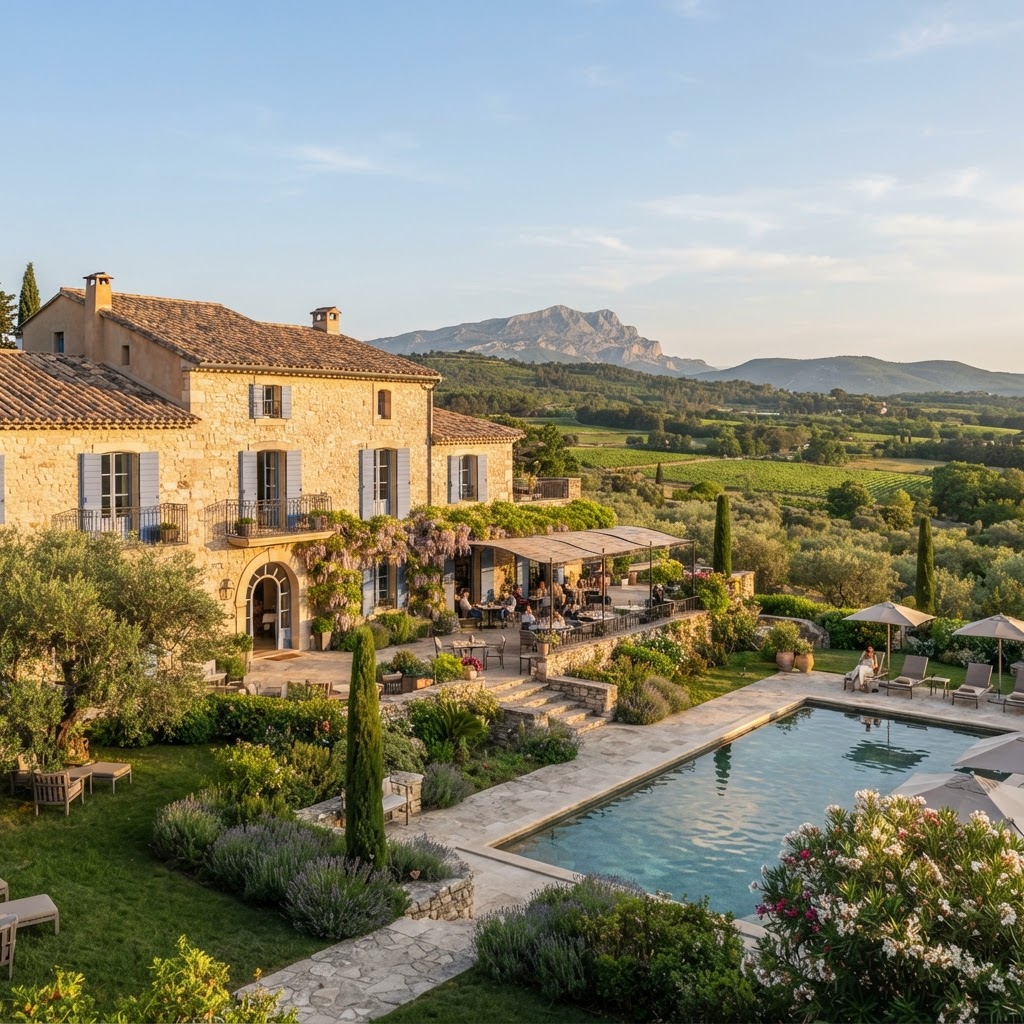
Aix-en-Provence hotel investment presents a compelling opportunity in one of southern France's most culturally rich and economically vibrant cities. Nestled in the heart of Provence-Alpes-Côte d'Azur, this historic university town attracts over 2.5 million visitors annually, drawn by its artistic heritage, thermal springs, and proximity to both Marseille and the Mediterranean coast. For hospitality investors, Aix-en-Provence offers a rare combination of year-round tourism demand, strong corporate travel from its technology sector, and resilient property values in a UNESCO-protected historic core. This definitive guide walks you through every stage of acquiring and operating a hotel in Aix-en-Provence—from market analysis and property selection to regulatory compliance, financing structures, and exit strategies—equipping you with the expert insights needed to make informed investment decisions in this premium Provençal market.
Key Takeaways
- Aix-en-Provence delivers year-round occupancy driven by cultural tourism, business travel from tech hubs, and its position as a gateway to Provence.
- Historic properties in the Mazarin Quarter and Vieil Aix command premium rates but require strict compliance with French heritage regulations.
- Hotel transactions in Aix-en-Provence typically involve murs et fonds (walls and business) structures, requiring dual legal and tax expertise.
- Average hotel acquisition costs range from €150,000 to €350,000 per key depending on location, classification, and operational performance.
- French hospitality regulations mandate specific employment contracts, working time directives, and accessibility standards that impact operational budgets.
- Successful investors leverage Aix-en-Provence's proximity to Marseille-Provence Airport and TGV connectivity to capture both leisure and MICE segments.
- Exit multiples for well-positioned boutique hotels in Aix-en-Provence have averaged 12–15× EBITDA as of 2026, reflecting strong investor appetite for Provençal assets.
Why Invest in Aix-en-Provence Hotels: Market Fundamentals and Tourism Drivers
Tourism Performance and Visitor Demographics
Aix-en-Provence continues to demonstrate exceptional resilience as a hospitality investment destination in 2026, attracting approximately 2.8 million overnight visitors annually. The city benefits from a sophisticated visitor mix that reduces seasonal volatility: 42% international tourists (predominantly British, German, American, and Asian), 38% domestic French leisure travellers, and 20% business visitors linked to the city's thriving technology sector and university ecosystem. For an in-depth understanding of the broader market context, consider exploring our French Hotel Investment Fundamentals guide.
Visitor demographics skew affluent, with average spending per stay reaching €385 in 2026, significantly above the regional average of €298. The presence of Aix-Marseille University (73,000 students) generates consistent mid-week demand, whilst the Thermes Sextius spa complex and surrounding wellness tourism infrastructure attract high-value guests seeking multi-night stays averaging 3.2 nights versus the Provence regional average of 2.4 nights.
Seasonal Patterns and Demand Stabilisation
Unlike coastal Provence destinations experiencing pronounced seasonality, Aix-en-Provence maintains relatively stable year-round performance:
- Peak season (May-September): 78-85% average occupancy
- Shoulder periods (March-April, October): 68-73% occupancy
- Winter months (November-February): 58-64% occupancy
This stability stems from corporate demand anchors including technology parks (Aix-en-Provence Technopole employing 12,500), legal and professional services supporting the city's role as administrative capital of Bouches-du-Rhône, and year-round cultural programming including the Aix-en-Provence Festival attracting 80,000+ attendees.
Economic Indicators and Infrastructure Development
The €2.1 billion extension of the TGV Mediterranean line, completed in 2024, reduced Paris travel time to 2 hours 58 minutes, strengthening Aix-en-Provence's position as a weekend destination for Parisian visitors. Marseille Provence Airport (25km distance) recorded 11.2 million passengers in 2025, with projected growth to 13 million by 2028 driven by expanded international connections.
Local economic fundamentals remain robust: unemployment at 7.2% (below the national 7.8%), median household income of €38,400 (18% above regional average), and a property price growth rate of 4.3% annually since 2023, signalling sustained investor confidence in the broader real estate market.
Competitive Positioning Within Provence-Alpes-Côte d'Azur
Aix-en-Provence occupies a distinctive niche between coastal resort markets (Nice, Cannes) and rural Provence destinations (Luberon, Alpilles). The city commands premium rates without coastal seasonality penalties, achieving average daily rates 22% higher than Avignon whilst maintaining 8-12 percentage points better occupancy than Saint-Rémy-de-Provence. This positioning attracts investors seeking cultural tourism stability with upscale demographic appeal, particularly within the boutique and lifestyle hotel segments where barriers to entry through planning restrictions protect existing operators from oversupply.
For more insights on investing in this vibrant market, visit our Complete Guide to Selling a Hotel. Explore related articles and tools to further enhance your investment strategy.
Understanding Aix-en-Provence's Hotel Market: Property Types, Locations and Performance Benchmarks
Hotel Property Segments and Investment Profiles
Boutique Historic Conversions dominate Aix-en-Provence's premium segment, typically comprising 15-35 rooms within renovated 17th-18th century hôtels particuliers. These properties command average daily rates of €245-€380 and require substantial capital investment (€85,000-€140,000 per key including acquisition and renovation). Regulatory constraints through Architectes des Bâtiments de France approvals create significant barriers to entry, protecting values for existing operators.
Branded Business Hotels (3-4 star, 80-140 rooms) cluster near the TGV station and peripheral business zones, targeting corporate and group markets. These assets typically trade at €65,000-€95,000 per key with ADRs of €115-€165, generating more stable cash flows through franchise systems and corporate negotiated rates.
Spa and Wellness Resorts capitalize on Aix-en-Provence's thermal heritage, particularly within the Sextius district. Properties featuring thermal facilities achieve premium valuations of €150,000-€220,000 per key with ADRs reaching €295-€425, though operating costs run 18-24% higher than standard hotels due to spa staffing and maintenance requirements.
Apart-Hotels and Extended Stay properties (45-85 units) serve the growing digital nomad market and university family visitors, achieving 72-76% annual occupancy with lower ADRs (€88-€125) but reduced operating cost ratios of 52-58% versus traditional full-service hotels at 68-74%.
Prime Investment Zones and Location Analysis
Understanding the strategic placement of hotels is crucial for maximizing returns. For an in-depth analysis of prime investment neighborhoods, refer to our Aix-en-Provence Hotel Quartier Mazarin Vieil Investment Guide.
2026 Performance Benchmarks by Segment
Boutique heritage properties in Vieil Aix achieve the market's strongest RevPAR performance at €195-€265, driven by scarcity value and Instagram-worthy aesthetics appealing to affluent millennials and experience-focused travelers. However, these assets face renovation cycles every 8-12 years costing €25,000-€45,000 per room to maintain heritage authenticity and competitive positioning.
Business hotels near the TGV station deliver more predictable returns with RevPAR of €88-€135, benefiting from corporate account stability and franchise reservation systems driving 38-45% of bookings. Operating margins typically reach 24-28% EBITDA compared to 18-24% for independent boutique properties requiring higher marketing expenditure.
Market-wide benchmarks for 2026 show average occupancy of 71.4% across all segments, ADR of €168, and RevPAR of €120. Investors should note that properties achieving top-quartile performance (RevPAR above €155) typically feature distinctive positioning, active revenue management, strong online reputation scores above 8.7/10, and investment in sustainability credentials increasingly demanded by international tour operators.
For a detailed analysis of performance metrics and seasonal patterns, explore our Aix-en-Provence Hotel RevPAR Seasonality Analysis. Additionally, for insights on evaluating hotel property ROI, visit our FAQ on How do investors calculate ROI when evaluating hotel properties.
Step-by-Step Hotel Acquisition Process in Aix-en-Provence
Phase 1: Property Search and Market Intelligence (Weeks 1-8)
Begin by engaging specialist hospitality brokers familiar with the Provence market—agents typically charge 3-5% commission (paid by seller) and provide access to off-market opportunities rarely advertised publicly. Simultaneously register with platforms like Stay4Hospitality to monitor listed properties and establish market pricing benchmarks.
Conduct preliminary due diligence on shortlisted properties: request three years of audited accounts, occupancy reports by segment (individual, group, corporate), and detailed operating expense breakdowns. For heritage properties in protected zones, obtain preliminary guidance from Architectes des Bâtiments de France regarding renovation restrictions before committing to formal offers.
Phase 2: Structuring and Submitting Offers (Weeks 8-12)
French hotel acquisitions typically follow one of two preliminary agreement structures:
- Promesse de Vente (unilateral promise to sell): Seller commits to selling at agreed price whilst buyer retains option to withdraw, usually with deposit of 5-10% held in sequestration. This structure favours buyers conducting complex due diligence but may be rejected by sellers with multiple interested parties.
- Compromis de Vente (bilateral sales agreement): Both parties commit to transaction, with 10% deposit paid immediately. Standard suspensive conditions include financing approval, planning permission verification, and satisfactory due diligence outcomes. This represents the more common approach for hotel transactions in Aix-en-Provence.
Your offer should specify clear timelines for due diligence (typically 60-90 days for hotels), financing arrangement (45-75 days), and completion date (usually 90-120 days from compromis signature). For more on property ownership structures and acquisition options, visit our comparison guide.
Phase 3: Comprehensive Due Diligence (Weeks 12-22)
- Financial Audit: Engage French hospitality accountants to verify revenue declarations, validate expense categorisations, identify any undisclosed liabilities, and confirm tax compliance. Scrutinise relationships with online travel agencies—commission rates should align with market standards of 15-18% for major platforms.
- Technical Survey: Commission building surveys addressing structural integrity, compliance with Établissement Recevant du Public (ERP) safety regulations, accessibility standards under French disability law, asbestos registers (mandatory for pre-1997 buildings), and energy performance diagnostics. Budget €8,000-€18,000 for comprehensive technical due diligence on properties of 25-60 rooms.
- Employment Law Considerations: French labour law requires automatic transfer of employment contracts during business asset sales (transfer of undertakings). Review all employee contracts, collective bargaining agreements, pension obligations, and any pending labour disputes. Factor existing payroll costs and notice period liabilities into acquisition modelling—terminating employees post-acquisition carries significant costs and legal complexity.
- Regulatory Compliance: Verify tourism classification (star rating), restaurant licences if applicable, liquor licences (Licence IV), and compliance with local urban planning regulations (Plan Local d'Urbanisme).
Phase 4: Completion and Post-Acquisition (Weeks 22-26)
The acte de vente (final deed of sale) must be executed before a notaire (public notary), who verifies legal title, calculates registration taxes, and registers the transaction with French land registry. The notaire's role is impartial—consider engaging your own legal counsel for commercial negotiation aspects. For a detailed understanding of the legal transaction process and the notaire's role, refer to our notaire and compromis de vente process guide.
Post-completion, register the business with relevant authorities including the Registre du Commerce et des Sociétés, notify employees formally of ownership change, and update tourism office registrations and classification certificates to reflect new ownership.
Financing Your Aix-en-Provence Hotel Investment: Structures, Costs and Lender Requirements
Acquisition Cost Components and Capital Requirements
Beyond the headline purchase price, Aix-en-Provence hotel acquisitions incur substantial additional costs that investors must factor into capital planning:
Notaire Fees and Registration Taxes: Expect total notaire costs of 7-8% of purchase price for existing trading hotels, comprising registration duties (5.8%), notaire professional fees (0.8-1.0%), land registry charges, and administrative disbursements. For new-build properties (less than 5 years old), reduced VAT treatment may apply, lowering total acquisition costs to 2-3%.
Agency Commissions: Typically 3-5% of purchase price, usually paid by seller but occasionally negotiated as shared cost in competitive bidding situations.
Due Diligence Costs: Budget €15,000-€35,000 for comprehensive legal, financial, and technical due diligence on properties valued at €2-8 million, scaling proportionally for larger assets.
Working Capital Reserve: Lenders typically require 6-9 months operating expense reserves held at completion, representing €180,000-€420,000 for a 35-room property with monthly operating costs of €30,000-€47,000.
Financing Structures and Lender Requirements
French Commercial Mortgages: Domestic banks offer the most competitive terms for established hospitality assets. Understanding French bank requirements and loan structures is essential for successful acquisition planning. French lenders typically provide:
- Loan-to-Value ratios: 60-70% for experienced operators with proven track records; 50-60% for first-time hotel investors
- Interest rates: 4.2-5.8% fixed for 10-15 year terms, or Euribor + 2.8-4.2% variable (as of mid-2026)
- Debt Service Coverage: Minimum 1.25-1.35x required, calculated on trailing twelve-month EBITDA less capital expenditure reserves
- Amortisation: Typically 15-20 years with possible 2-3 year interest-only period during stabilisation
Lenders scrutinise operator experience heavily—first-time hotel investors should expect more conservative LTV ratios and may need to demonstrate hospitality management credentials or commit to engaging experienced operators. French banks require detailed business plans, three years of projected financials, and evidence of sector-specific expertise before approving hospitality loans.
Tax-Efficient Ownership Structures
Société Civile Immobilière (SCI): The most common structure for French hotel property ownership, offering:
- Separation of property ownership from operating business
- Flexible profit distribution among multiple investors
- Favourable inheritance tax treatment
- Potential for sale-and-leaseback arrangements where SCI owns property and leases to operating company
Foreign Investor Considerations: Non-EU investors should evaluate:
- French-registered company (SARL or SAS) for operational control and liability protection
- Double taxation treaties between France and country of residence
- Wealth tax implications (Impôt sur la Fortune Immobilière) applying to French real estate exceeding €1.3 million
- Withholding tax on dividends (typically 12.8% but varies by treaty)
Alternative Financing Approaches
When exploring what financing options are available for purchasing hospitality properties, investors should consider several alternatives beyond traditional bank mortgages:
Sale-and-Leaseback: Established operators may structure acquisitions where property is sold to institutional investors or REITs, then leased back under 15-25 year agreements. This releases capital for operational investment whilst maintaining management control, though rental obligations typically represent 8-12% of revenue.
International Investor Loans: Specialist hospitality lenders and private debt funds offer flexibility for complex acquisitions or borrowers unable to meet French bank criteria, typically at:
- LTV ratios: 55-65%
- Interest rates: 6.5-9.2%
- Terms: 5-10 years with earlier refinancing into traditional mortgages once trading history established
Mezzanine Finance: For acquisitions requiring leverage above senior debt LTV limits, mezzanine providers offer subordinated debt at 9-13% interest, filling the gap between senior loans and equity to achieve total leverage of 75-80% in exceptional cases.
Vendor Finance: In selective situations, sellers may provide partial financing (typically 10-20% of purchase price) over 3-5 years at 5-7% interest, particularly when selling to experienced operators who can demonstrate capability to enhance property performance.
Investors should engage specialist hospitality tax advisors early in the acquisition process to optimise ownership structures, particularly when combining French property ownership with international operating entities or multiple investor jurisdictions.
French Hospitality Regulations and Compliance Requirements in Aix-en-Provence
Understanding the French Hotel Classification System
Foreign investors entering the Aix-en-Provence market must navigate the étoiles (star) classification system, administered by Atout France. This mandatory framework spans one to five stars, with Palace designation for exceptional properties. Classification directly impacts pricing power, distribution partnerships, and guest expectations. Reclassification occurs every five years, requiring properties to meet evolving criteria across 246 assessment points covering comfort, accessibility, sustainable practices, and service quality.
In Aix-en-Provence's competitive market, three-star properties typically command €95–140 per night, whilst four-star hotels achieve €160–280. The classification audit costs €1,200–2,400 depending on room count, with annual maintenance fees ranging from €800 to €3,500.
Employment Law Compliance and Labour Regulations
French employment legislation represents one of the most complex aspects of hotel operations. The 35-hour working week remains standard, though collective agreements (conventions collectives) in hospitality permit modulated schedules across seasonal peaks. Permanent contracts (CDI) provide employees substantial protection, whilst fixed-term contracts (CDD) face strict limitations—typically restricted to seasonal work or temporary replacements.
Labour costs in Provence-Alpes-Côte d'Azur average 42–48% of revenue for full-service hotels, significantly higher than Mediterranean competitors. Social charges add approximately 45% atop gross salaries, meaning a receptionist earning €2,200 monthly costs the employer roughly €3,190 total. Terminating permanent staff requires documented justification and often involves severance payments calculated at one-quarter month's salary per year of service (minimum).
Health, Safety and Accessibility Standards
Hotels qualify as Établissements Recevant du Public (ERP), triggering comprehensive safety obligations. Classification depends on capacity: a 40-room hotel typically falls under 4th category ERP, requiring fire safety systems, evacuation plans, staff training records, and biennial safety commissions. Non-compliance risks temporary closure orders. For detailed regulatory compliance and licensing requirements, visit our Aix-en-Provence Hotel ERP & Tourism Licensing Guide.
PMR accessibility (Personnes à Mobilité Réduite) mandates that hotels provide adapted rooms—1% of total capacity for properties with 20+ rooms, with minimum one adapted room for smaller establishments. Compliance extends beyond bedrooms to include reception areas, restaurants, and circulation spaces. Retrofitting heritage buildings often necessitates creative solutions, with costs ranging €15,000–45,000 per adapted room.
Heritage Building Restrictions and Protected Zones
Aix-en-Provence's historic centre falls within Secteurs Sauvegardés (protected heritage zones), where Architectes des Bâtiments de France (ABF) exercise strict control over exterior modifications. Investors targeting buildings within 500 metres of classified monuments face additional scrutiny. Even interior alterations may require ABF approval if visible from public spaces.
Permit processes extend 4–9 months for heritage properties versus 2–3 months for modern buildings. Budget 12–18% additional construction costs for compliant materials and techniques that preserve architectural character.
Restaurant and Bar Licensing Requirements
Operating a bar requires a licence IV (full alcohol licence), which cannot be newly created—only transferred from existing licences within the same département. Market values in Bouches-du-Rhône range €8,000–18,000 for licence IV transfers. Restaurants serving wine with meals operate under petite licence restaurant, whilst those offering spirits need grande licence restaurant.
Terrace permits (autorisation d'occupation du domaine public) in Aix-en-Provence's historic streets involve annual fees of €150–280 per square metre, with strict limitations on operating hours (typically until 22:00–23:00) to manage noise complaints.
Co-Ownership Structures and Compliance
For investors considering co-ownership models, compliance with syndic de copropriété regulations is essential. These rules govern shared ownership properties, ensuring equitable management and maintenance of common areas. For more insights, explore our Aix-en-Provence Hotel Syndic & Copropriété Management Guide.
Operational Strategy and Revenue Optimisation for Aix-en-Provence Hotels
Operational Strategy and Revenue Optimisation for Aix-en-Provence Hotels
Aix-en-Provence presents a unique landscape for hotel operators aiming to maximise revenue while maintaining operational efficiency. By focusing on strategic market positioning, dynamic pricing, distribution channel optimisation, staffing models, ancillary revenue, and technology systems, investors can achieve sustainable profitability.
Strategic Market Positioning in a Competitive Landscape
Aix-en-Provence's hotel market is segmented into distinct niches: luxury heritage properties commanding €300+ per night, boutique lifestyle hotels targeting €180–260, and efficient business-focused properties at €110–165. Successful positioning requires authentic differentiation rather than broad appeal. Properties within 400 metres of Cours Mirabeau achieve 8–12% RevPAR premiums over peripheral locations, while those offering dedicated parking capture business travellers willing to pay €15–22 daily supplements.
The market supports approximately 3,200 hotel rooms across all categories, with corporate demand driven by Aix-Marseille-Provence Métropole's technology sector and legal services cluster. Leisure demand peaks April–June and September–October, with winter months (November–February) seeing occupancy drop to 52–61% outside holiday periods.
Dynamic Pricing Strategies for Seasonal Volatility
Revenue management in Aix-en-Provence demands sophisticated seasonal calibration. High-season pricing (May–June, September) should target 85–92% occupancy at premium rates, while shoulder months (March–April, October) benefit from volume-focused strategies accepting 75–82% occupancy at reduced rates. For more on pricing strategies, see our Aix-en-Provence Hotel Revenue Management & Pricing Guide.
Recommended pricing framework:
Distribution Channel Optimisation
Balancing direct bookings against OTA distribution requires disciplined channel management. Aix-en-Provence hotels achieving 35–42% direct booking ratios (above the French average of 28–32%) typically invest in multilingual booking engines, metasearch advertising, and past-guest email marketing.
Booking.com and Expedia collectively drive 38–46% of international bookings but extract 15–18% commissions. Strategic rate parity with visible added-value for direct bookers (e.g., welcome amenity, room upgrade, flexible cancellation) shifts price-sensitive guests toward owned channels. Budget €180–320 monthly for channel manager technology integrating rates across 12–18 distribution platforms.
Staffing Models Balancing Regulation and Profitability
French labour law necessitates creative staffing approaches. Successful operators maintain a permanent core team (60–70% of total hours) supplemented by seasonal contracts during peak months. Cross-training permanent staff across reception, breakfast service, and housekeeping coordination provides flexibility within the 35-hour framework.
Outsourcing non-core functions reduces fixed labour exposure: professional housekeeping contractors charge €8–12 per room (departure clean) versus €11–15 fully-loaded cost for employed staff. Maintenance, night audit, and revenue management increasingly operate through specialist partnerships, converting fixed costs to variable expenses.
Ancillary Revenue Development
Beyond room revenue, Aix-en-Provence's cultural positioning supports premium ancillary income:
- Wine tourism packages: Partnerships with Côtes de Provence vineyards generate €45–85 per guest commissions on full-day tours.
- Spa and wellness: Even compact properties (15–25 rooms) achieve €12,000–28,000 annual spa revenue through partnership models with mobile therapists.
- Event spaces: Meeting rooms hosting corporate seminars yield €280–650 daily, with 40–55 annual booking days realistic for properties near business districts.
- Culinary experiences: Cooking classes featuring Provençal cuisine command €95–140 per participant.
Technology Systems Driving Efficiency
Modern PMS (Property Management Systems) integrating channel management, guest communication, and revenue analytics cost €80–165 monthly for properties under 50 rooms. Prioritise systems offering French-language support and VAT-compliant reporting. Contactless check-in technology reduces reception staffing requirements while appealing to international guests, with implementation costs of €2,400–5,800 including hardware and integration.
For further insights on operational performance targets and returns, refer to our FAQ on typical ROI expectations for hotel investments in 2026.
Common Investment Pitfalls and Risk Mitigation Strategies
Underestimating Heritage Building Renovation Complexity
The single costliest mistake involves inadequate due diligence on heritage property renovation requirements. Investors routinely budget €800–1,200 per square metre for refurbishment, only to encounter actual costs of €1,400–2,100 when ABF requirements mandate handcrafted joinery, traditional lime renders, and heritage-compliant mechanical systems concealed from view.
Case example: A 22-room hotel acquisition near Place des Quatre Dauphins in 2024 budgeted €680,000 for renovation. ABF requirements for façade restoration, interior stone preservation, and concealed HVAC systems ultimately cost €1.24 million—an 82% overrun that severely impacted projected returns.
Mitigation tactics:
- Commission detailed technical surveys by architects experienced with ABF processes before finalising acquisition
- Budget 25–35% contingency for heritage properties versus 12–18% for modern buildings
- Obtain preliminary ABF guidance during due diligence, not after completion
- Factor 6–10 month extended timelines for heritage approvals into cash flow projections
Misjudging Employment Termination Complexity
Acquiring operational hotels means inheriting employment contracts that prove extraordinarily difficult to modify. Investors assuming they can restructure staffing post-acquisition face harsh realities: terminating permanent employees without genuine economic justification (documented losses, not merely underperformance) triggers labour tribunal claims, with average settlements of €8,000–22,000 per employee plus legal costs.
French courts scrutinise licenciement économique (economic dismissal) rigorously, requiring proof of sustained financial difficulty and demonstrated attempts to redeploy staff. The process typically spans 4–7 months with mandatory consultation periods.
Mitigation approach:
- Conduct thorough employment contract review during due diligence, calculating full termination liability
- Model financial projections assuming existing staffing structures remain largely intact for 18–24 months
- Negotiate seller warranties covering undisclosed employment liabilities
- Consider natural attrition strategies rather than forced restructuring
- Budget €15,000–35,000 for specialist employment law counsel during transition
Overlooking Seasonal Cash Flow Volatility
Aix-en-Provence's pronounced seasonality creates dangerous cash flow troughs. November through February generates just 18–23% of annual revenue whilst fixed costs (permanent staff, utilities, property taxes) continue largely unchanged. Operators without adequate working capital reserves face crisis points around January–February when accumulated low-season losses peak.
Properties with high debt service ratios (above 1.8x EBITDA) prove particularly vulnerable. A 28-room property carrying €2.1 million acquisition debt at 4.2% interest requires approximately €110,000 annual debt service—manageable during high season but crushing during winter months producing €8,000–14,000 monthly revenue against €22,000–28,000 operating costs.
Risk mitigation:
- Maintain working capital reserves covering 4–5 months of negative cash flow (typically €80,000–140,000 for 20–30 room properties)
- Structure debt with seasonal payment flexibility or interest-only periods during acquisition years
- Develop confirmed corporate contracts providing base winter occupancy of 35–45%
- Implement aggressive cash collection policies, minimising receivables during high season
Failing to Secure Proper Building Permits
Commencing renovation work without valid permis de construire or déclaration préalable invites stop-work orders, fines of €1,200–6,000 per square metre of unauthorised construction, and mandatory restoration to original condition. The temptation to "ask forgiveness rather than permission" proves catastrophically expensive in protected Aix-en-Provence zones.
Permit applications require detailed architectural plans, heritage impact assessments, and often archaeological surveys. Processing timelines of 3–5 months for standard applications extend to 7–11 months when ABF review applies.
Neglecting Thermal Spa Licensing Requirements
Investors attracted to Aix-en-Provence's spa market potential often overlook that operating thermal facilities requires Agence Régionale de Santé (ARS) authorisation, distinct from standard hotel licensing. Facilities offering thalassotherapy, balneotherapy, or therapeutic treatments face medical-grade water quality standards, qualified staff requirements, and rigorous hygiene protocols.
Retrofitting spa facilities into existing hotels costs €180,000–450,000 for 80–150 square metre facilities, with ARS approval processes spanning 5–8 months. Operating without proper authorisation risks immediate closure and fines reaching €45,000.
Protective measures:
- Verify existing spa licences during acquisition due diligence
- Budget €12,000–25,000 for ARS application processes including water analysis and facility certification
- Engage specialist consultants familiar with therapeutic spa regulations before committing to spa development
- Consider partnership models with licensed spa operators rather than direct operation
Exit Planning and Maximising Hotel Sale Value in Aix-en-Provence
Exit Planning and Maximising Hotel Sale Value in Aix-en-Provence
Maximising sale value requires disciplined preparation beginning 18–24 months before market launch. Unlike residential property, hotel valuations reflect operational performance, making the trailing twelve-month period critically important. Buyers scrutinise occupancy trends, rate growth, TripAdvisor rankings, and profit margins, meaning rushed preparations yield suboptimal outcomes.
Successful sellers follow a structured timeline that addresses operational improvements, financial documentation, regulatory compliance, and market positioning well before engaging brokers. Properties demonstrating consistent performance improvements throughout the pre-sale period command premium valuations, whilst those showing last-minute cosmetic fixes face buyer scepticism and reduced offers.
18–24 Month Pre-Sale Value Enhancement Timeline
24–18 months before sale:
- Complete comprehensive property audit identifying all deferred maintenance, regulatory compliance gaps, and operational inefficiencies requiring correction
- Address major capital improvements including roof repairs, HVAC replacements, façade restoration, and bathroom renovations that buyers heavily discount if deferred
- Implement modern property management system (PMS) and channel manager demonstrating operational sophistication and accurate data capture
- Begin systematic online reputation enhancement responding to all reviews, addressing service gaps, and targeting 4.2+ TripAdvisor rating (properties below 3.8 face 12–18% valuation penalties)
18–12 months before sale:
- Renegotiate key supplier contracts securing competitive rates and demonstrating transferable relationships that reduce buyer transition risk
- Optimise revenue management practices implementing dynamic pricing, reducing OTA dependency below 45% of bookings, and documenting repeater guest percentages
- Compile complete regulatory compliance documentation including ERP safety certificates, PMR accessibility compliance, employment contracts, and all permits
- Engage specialist hospitality accountants to review financial record-keeping and prepare systems for buyer due diligence scrutiny
12–6 months before sale:
- Commission professional hotel valuation from recognised hospitality specialists familiar with Provence market dynamics and buyer expectations
- Prepare detailed operations manual documenting all procedures, supplier relationships, seasonal staffing patterns, and revenue management strategies
- Achieve consistent monthly performance demonstrating stability rather than erratic results; buyers discount properties showing unexplained volatility
- Maximise direct booking conversion through website optimisation, email marketing to past guests, and loyalty programme development
6–0 months before sale:
- Engage specialist hospitality broker with proven Aix-en-Provence transaction experience and qualified buyer database (typically 3–5% commission)
- Create comprehensive marketing materials including professional photography, virtual tours, detailed financial summaries, and market positioning analysis
- Prepare confidential information memorandum containing three years' financial statements, current year projections, competitive analysis, and growth opportunities
- Coordinate professional advisory team including notaire, employment law specialist, and tax advisor to manage transaction complexities
French Hotel Valuation Methodologies
Aix-en-Provence hotel transactions in 2026 typically employ multiple valuation approaches, with final pricing reflecting weighted consideration of each method:
Capitalisation rate approach applies market-derived cap rates to stabilised net operating income. Current Aix-en-Provence cap rates range:
EBITDA multiple methodology proves popular with financial buyers and private equity. Aix-en-Provence properties achieving stable EBITDA margins above 28% command 6.5–8.2× EBITDA multiples, whilst those below 22% EBITDA margin trade at 4.8–6.0× multiples. The market rewards operational excellence with meaningful premium multiples.
RevPAR-based models apply per-room multipliers reflecting market positioning. Properties achieving €85+ RevPAR typically trade at €95,000–140,000 per key, whilst those below €60 RevPAR achieve €55,000–82,000 per key. Location, condition, and growth trajectory significantly influence per-key values.
The Sale Process Timeline and Key Milestones
Realistic transaction timelines span 6–9 months from initial marketing to completion:
Months 1–2: Confidential marketing to qualified buyers through specialist hospitality brokers, targeting 8–15 serious enquiries
Months 2–4: Buyer presentations, property tours, preliminary offers, and negotiation of heads of terms including price, completion timeline, and key conditions
Months 4–7: Due diligence period where buyers examine financial records, employment contracts, building surveys, regulatory compliance, and market positioning. This phase frequently reveals issues requiring price renegotiation.
Months 7–9: Legal documentation, final negotiations, securing buyer financing, and completion. French property transactions involve notaire coordination, with completion costs (notaire fees, registration taxes) totalling 7–8% of purchase price paid by buyers.
Optimal Market Timing Considerations
Launching hotel sales during periods demonstrating strong operational performance maximises buyer confidence. Avoid marketing during November–February when current-year results show seasonal weakness. April–June and September–October launches allow buyers to witness high-season performance firsthand whilst reviewing strong trailing twelve-month financials.
The broader Provence hotel market entered 2026 with renewed investor appetite following post-pandemic recovery consolidation. International buyers—particularly from UK, Belgium, Netherlands, and increasingly UAE—represent 42–48% of Aix-en-Provence transactions, attracted by lifestyle appeal and stable tourism fundamentals.
2026 Transaction Data and Buyer Profiles
Recent Aix-en-Provence hotel transactions demonstrate healthy market conditions:
- Average transaction size: €2.8–4.6 million for 18–32 room properties
- Median time on market: 7.2 months (down from 8.9 months in 2024)
- Buyer composition: 38% private individuals/families, 31% hospitality operators seeking expansion, 22% financial buyers/private equity, 9% international lifestyle buyers
- Typical exit multiples: 6.8–7.4× EBITDA for well-positioned properties with strong operational track records
Properties demonstrating 12–18% year-over-year revenue growth, EBITDA margins above 30%, and TripAdvisor ratings exceeding 4.3 achieve premium valuations 15–22% above market averages. Conversely, properties requiring immediate capital investment, carrying employment disputes, or showing declining performance face 18–28% discounts to comparable assets.
Professional Advisory Team Requirements
Successful exits require coordinated specialist advisors: hospitality-focused business brokers (fees typically 3–5% of sale price), experienced hospitality accountants, notaires familiar with commercial property transactions, and employment law specialists managing staff transfer obligations under French labour law. Budget €45,000–85,000 in combined professional fees for transactions in the €2.5–5 million range.
What is the typical ROI for boutique hotels in Aix-en-Provence in 2026?
Boutique hotels in Aix-en-Provence typically deliver net ROI between 6.5% and 9.2% annually, depending on location and operational efficiency. Properties within
Can non-EU investors purchase hotel properties in Aix-en-Provence?
Non-EU investors face no restrictions when purchasing hotel properties in Aix-en-Provence, though operational and tax considerations differ from EU nationals. Y
How does seasonality affect hotel cash flow in Aix-en-Provence?
Aix-en-Provence demonstrates relatively balanced seasonality compared to coastal Provence destinations, with distinct peaks during April-October. July and Augus
What are the ongoing compliance costs for hotel owners in Aix-en-Provence?
Annual compliance costs typically represent 8-12% of gross revenue for Aix-en-Provence hotels. Mandatory expenses include accessibility audits (€1,200-€3,500 an
Which neighbourhoods in Aix-en-Provence offer the best hotel investment potential?
The Mazarin Quarter delivers the strongest investment fundamentals, combining UNESCO-protected architecture with proximity to Cours Mirabeau and luxury retail.
How long does it take to break even on an Aix-en-Provence hotel acquisition?
Break-even timelines for Aix-en-Provence hotel investments typically range from 8 to 14 years for acquisition-and-operate strategies, depending on leverage, pro
What due diligence is essential before purchasing a hotel in Aix-en-Provence?
Comprehensive due diligence for Aix-en-Provence hotels must examine titre de propriété (title deed) for any servitudes or easements, particularly in historic bu
Are there tax incentives for hotel investors in Provence-Alpes-Côte d'Azur region?
The Provence-Alpes-Côte d'Azur region offers several tax advantages for hotel investors willing to commit to specific improvements or employment targets. The Di
Related Resources
- Complete Hospitality Property Selling Guide
- Hospitality Property Sale Financial Statement Preparation
- International Tax Treaty Navigation for Hospitality Sellers
- List Your Property on Stay4Hospitality
- Free Property Valuation Tool
- bail commercial vs freehold acquisition structures
- seasonal revenue patterns and location premium analysis
- ERP fire safety and accessibility compliance
- staff accommodation and employment law obligations
- capital gains tax and non-resident seller obligations
- notaire process and compromis de vente structuring
- licence touristique and star classification requirements
- list your Aix-en-Provence hotel for sale
- What financing options are available for purchasing hospitality properties
- How do investors calculate ROI when evaluating hotel properties
- What are the typical ROI expectations for hotel investments in 2026
Browse hospitality properties for sale | List your property | Free valuation