Acheter un hôtel à Corralejo | Guide d'achat d'hôtel à Fuerteventura
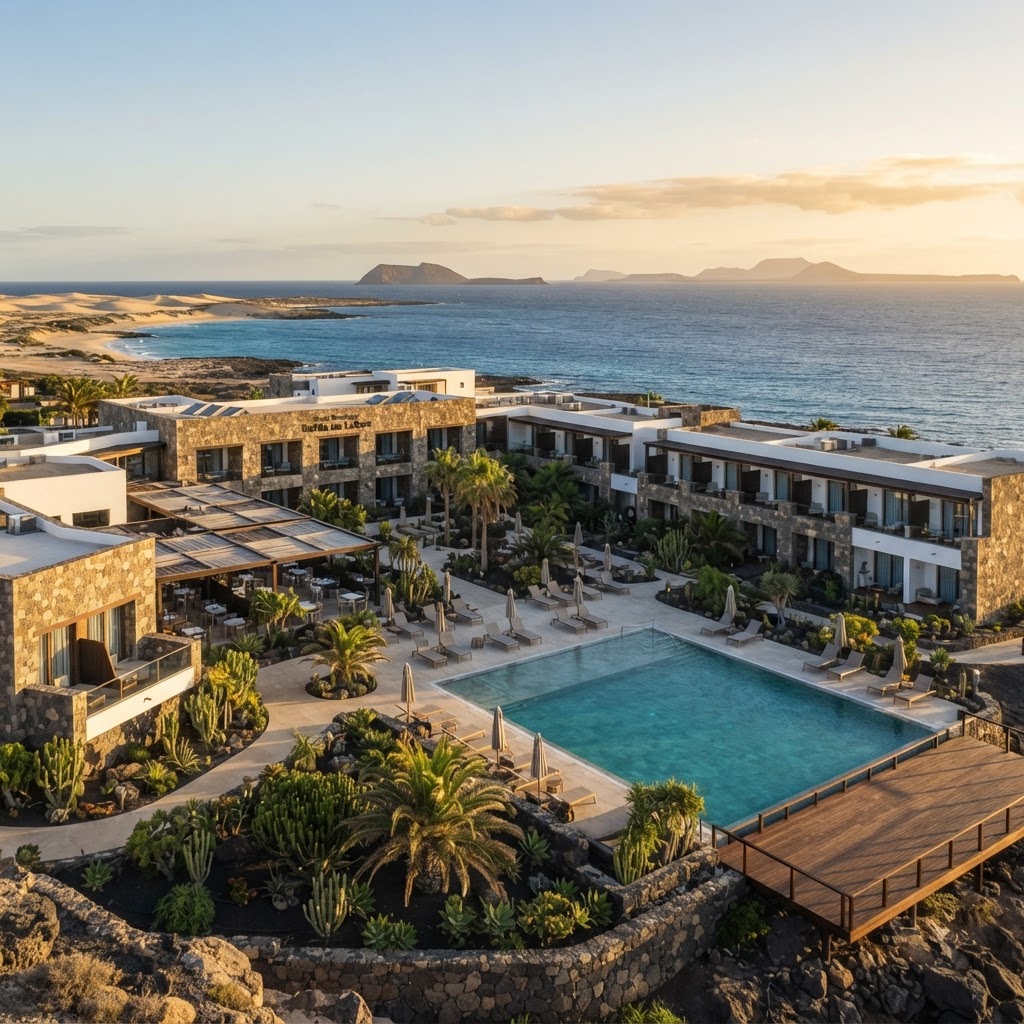
Buying a hotel in Corralejo positions investors at the heart of Fuerteventura's most dynamic tourism hub, where pristine beaches meet year-round sunshine and a thriving international visitor base. This coastal town in the Canary Islands has evolved from a quiet fishing village into a premier European resort destination, offering hotel investors exceptional occupancy potential, robust infrastructure, and Spain's favourable tax regime for hospitality businesses. Whether you're targeting the surf tourism market, digital nomad extended stays, or traditional sun-and-beach holidaymakers, Corralejo's diverse demand drivers create multiple revenue opportunities. This comprehensive buyer's guide walks you through every critical aspect of acquiring a hotel property in Corralejo—from understanding local market dynamics and navigating Spanish property law to securing financing, conducting due diligence, and positioning your asset for long-term profitability in one of the Atlantic's most sought-after destinations.
Key Takeaways
- Corralejo delivers year-round tourism demand with average annual temperatures of 24°C, minimising seasonal occupancy fluctuations that plague mainland European markets.
- Spanish hotel acquisitions require navigating complex legal structures including asset deals versus share deals, each carrying distinct tax implications and liability transfers.
- Properties within 500 metres of Corralejo's beaches command 30-40% premium valuations but offer significantly higher RevPAR and occupancy rates.
- Non-resident buyers must obtain an NIE (Número de Identidad de Extranjero) and can face property transfer taxes ranging from 6.5% to 10% depending on transaction structure.
- Corralejo's tourism infrastructure—including ferry connections to Lanzarote and proximity to natural parks—creates diversified demand beyond traditional beach tourism.
- Due diligence must verify all hospitality licences are transferable, as Fuerteventura has imposed strict limitations on new hotel development in protected coastal zones.
- Financing options include Spanish commercial mortgages (typically 50-60% LTV for non-residents), seller financing, and EU hospitality investment funds targeting Canary Islands assets.
Why Corralejo? Understanding the Market Fundamentals for Hotel Investors
Strategic Location and Tourism Infrastructure
Corralejo occupies a uniquely advantageous position in the Canary Islands hospitality market. Located on Fuerteventura's northern tip, the resort town sits just 35 kilometres from Fuerteventura Airport (FUE), delivering transfer times under 40 minutes—a critical factor for leisure travellers. The town's ferry terminal provides daily connections to Lanzarote (30-minute crossing to Playa Blanca), creating dual-island itinerary opportunities that extend average guest stays.
Fuerteventura recorded 2.1 million international arrivals in 2023, with Corralejo capturing approximately 28% of the island's hotel inventory and an estimated 35% of total visitor nights. The destination maintains year-round appeal with average annual temperatures of 24°C and fewer than 30 days of rainfall, supporting occupancy levels that significantly outperform seasonal Mediterranean markets.
Source Market Diversification and Guest Demographics
Corralejo's visitor composition provides natural revenue stability:
- United Kingdom: 42% of arrivals, average 7.2-night stays
- Germany: 26% of arrivals, average 9.4-night stays
- Spanish domestic: 15% of arrivals, concentrated in July-August and holiday periods
- Netherlands and Scandinavia: Combined 12%, growing segment with strong winter demand
- Emerging markets: France and Eastern Europe showing 8-12% annual growth
This diversification mitigates single-market dependency risks that plague competing destinations. The average length of stay (8.1 nights) exceeds the Canary Islands average by 1.3 nights, directly impacting per-guest revenue potential.
Competitive Landscape and Market Positioning
Corralejo's hotel market comprises approximately 12,500 regulated beds across 85 properties, with concentration in the 3-star and 4-star categories. Unlike oversaturated markets such as Playa de las Américas (Tenerife), Corralejo maintains supply-demand equilibrium with limited new development approvals under current planning restrictions.
Comparative Market Analysis:
Regulatory Environment and Investment Incentives
The Canary Islands operate under Régimen Económico y Fiscal (REF), offering hospitality investors substantial advantages: 4% corporate tax rate (versus 25% mainland Spain), exemption from IGIC (Canary Islands sales tax) on international tourism services, and Zona Especial Canaria (ZEC) benefits for qualifying investments exceeding €100,000 with job creation commitments.
Fuerteventura's Cabildo (island government) has implemented a moratorium on new large-scale resort development in Corralejo's coastal zone, protecting existing asset values while permitting renovation and repositioning projects. This regulatory stance favours value-add acquisition strategies over ground-up development, creating opportunities for investors to acquire underperforming assets in a supply-constrained environment.
The municipality's commitment to sustainable tourism development—including recent investments in wastewater infrastructure (€12M), coastal restoration (€8M), and pedestrianisation of the old town—signals long-term destination management that supports premium positioning strategies.
Types of Hotel Properties Available in Corralejo: Asset Classes and Investment Profiles
Beachfront Resort Hotels: Premium Asset Class
Corralejo's beachfront resort hotels represent the market's premium tier, concentrated along Playa de Corralejo and the northern Grandes Playas stretch. These properties typically range from 180-450 keys, with direct beach access, comprehensive F&B facilities (2-4 outlets), pools, spa amenities, and animation programmes.
Investment Profile:
- Price per key: €85,000-€165,000 depending on condition and brand affiliation
- Typical transaction size: €18M-€65M
- Target guest: UK and German families, couples 35-65 demographic
- Operational model: Predominantly management contracts with international operators (TUI, Iberostar, RIU) or franchise agreements
- Investor suitability: Institutional investors, hospitality REITs, experienced multi-property operators with €20M+ deployment capacity
These assets deliver stabilised NOI yields of 6.5-8.2% but require significant working capital (€2.5M-€8M) and operational expertise. The barrier to entry through capital requirements and operational complexity limits competition.
Boutique Properties in Old Town Corralejo
The historic harbour district hosts a growing boutique hotel segment, typically 12-35 rooms in converted townhouses or purpose-built low-rise structures. These properties emphasise design, personalised service, and proximity to restaurants, bars, and authentic local experiences.
Investment Profile:
- Price per key: €65,000-€125,000 with significant variation based on condition
- Typical transaction size: €1.2M-€4.5M
- Target guest: Independent travellers, couples 28-55, higher education/income demographics
- Operational model: Owner-operated or small management company partnerships
- Investor suitability: Lifestyle investors, hospitality entrepreneurs, family offices seeking hands-on involvement
Boutique properties achieve ADR premiums of 15-25% versus comparable resort hotels but face higher operating cost ratios (65-72% versus 58-65%) due to scale limitations. Skilled operator dependency represents the primary risk factor.
Aparthotels and Serviced Accommodation
Aparthotel properties—combining hotel services with self-catering accommodation—comprise approximately 35% of Corralejo's inventory. Units range from studios to 2-bedroom configurations, typically in 50-180 unit complexes.
Investment Profile:
- Price per key: €48,000-€95,000
- Typical transaction size: €3.5M-€15M
- Target guest: Families with children, extended-stay guests (10+ nights), budget-conscious travellers
- Operational model: Reception services with housekeeping packages, often third-party management
- Investor suitability: Value-oriented investors, operators comfortable with vacation rental dynamics
These assets offer operational flexibility—many operate hybrid models combining traditional hotel bookings with vacation rental platforms. Lower service intensity reduces labour costs but may compress achievable ADR. Recent regulatory clarity on short-term rental licensing has enhanced institutional investor confidence in this segment.
Surf Lodges and Activity-Focused Concepts
Corralejo's reputation as a world-class wind and kite surfing destination supports a niche segment of activity-focused accommodation, typically 20-45 rooms with equipment storage, instruction facilities, and social spaces designed for the 22-40 adventure travel demographic.
Investment Profile:
- Price per key: €38,000-€72,000
- Typical transaction size: €950K-€3.2M
- Target guest: Active sports enthusiasts, digital nomads, extended-stay adventure travellers
- Operational model: Owner-operated with integrated activity businesses, or partnerships with sports schools
- Investor suitability: Niche hospitality operators, sports industry entrepreneurs, lifestyle investors
These properties achieve exceptionally high guest satisfaction scores (TripAdvisor averages 4.6-4.8/5.0) and strong direct booking ratios (45-60%), reducing OTA dependency. However, seasonal demand concentration (October-April for wind sports) requires sophisticated revenue management.
Mixed-Use Developments with Retail and F&B Components
Several opportunities exist for mixed-use acquisitions combining hotel accommodation (typically 80-150 keys) with ground-floor commercial spaces, restaurants, and retail units. These developments cluster around Avenida Nuestra Señora del Carmen and newer areas near the dunes.
Investment Profile:
- Price per key: €72,000-€118,000 (hotel component)
- Additional commercial value: €2,500-€4,800 per sqm for retail/F&B
- Typical transaction size: €8M-€22M
- Operational complexity: Multiple tenant management, community governance structures
- Investor suitability: Diversified hospitality-retail investors, experienced mixed-use operators
These assets provide revenue diversification and potential for commercial lease income (€18-€32 per sqm monthly) that stabilises cash flow during hospitality market fluctuations.
The Complete Acquisition Process: Step-by-Step Timeline from Search to Completion
Phase 1: Pre-Acquisition and Market Selection (Weeks 1-4)
Successful hotel acquisitions in Corralejo begin with strategic market validation before property-specific evaluation. Engage specialist hospitality brokers with Canary Islands track records—expect 2-3% commission on purchase price split between buyer and seller representation. Simultaneously retain Spanish legal counsel experienced in hospitality transactions (budget €8,000-€18,000 for full transaction support).
Critical pre-acquisition activities:
- Market feasibility analysis: Commission independent STR reports for Corralejo showing trailing 12-month performance data
- Financial pre-qualification: Secure debt financing indication from Spanish banks (typical LTV: 60-70% for stabilised assets) or confirm equity availability
- Investment criteria definition: Establish clear parameters for asset size, condition, operational status, and return thresholds
- Preliminary screening: Review 8-15 opportunities to calibrate market pricing and identify 2-3 priority targets
Realistic timeline: 3-5 weeks for investors new to the market; 1-2 weeks for repeat buyers with established advisor relationships.
Phase 2: Property Identification and Initial Evaluation (Weeks 5-8)
Once target properties are identified, conduct preliminary assessment before formal offer submission. Request the información básica package including: basic financial statements (P&L for previous 2-3 years), occupancy and ADR data, property tax bills, community fee statements, current licenses and permits, and preliminary title information.
Site visit protocol:
- Physical inspection: Assess building condition, deferred maintenance, required capital improvements
- Operational observation: Visit during operating hours to evaluate service delivery, staffing levels, guest mix
- Competitive shopping: Stay at 3-4 competing properties to benchmark positioning and value proposition
- Local authority consultation: Verify planning status, pending developments, infrastructure projects
Compile findings into an investment memorandum supporting go/no-go decision. For properties meeting criteria, prepare Letter of Intent (LOI) submission.
Realistic timeline: 2-4 weeks including site visits and preliminary analysis.
Phase 3: LOI Submission and Exclusivity Negotiation (Weeks 9-11)
The Carta de Intenciones (Letter of Intent) establishes preliminary commercial terms and, critically, exclusivity period preventing the seller from negotiating with other parties. Spanish hospitality transactions typically grant 45-90 day exclusivity for due diligence completion.
Essential LOI components:
- Purchase price and structure (asset vs. share deal implications)
- Deposit amount and conditions (typically 10% of purchase price, held in escrow)
- Due diligence scope and timeline
- Exclusivity duration and conditions for extension
- Key conditions precedent (financing, license verification, structural survey approval)
- Proposed completion timeline
Negotiation leverage points: Market conditions, property occupancy status, seller urgency, competing interest levels, and identified preliminary concerns all influence achievable terms. Expect 2-3 weeks for LOI negotiation and execution, with deposit transfer triggering exclusivity commencement.
Phase 4: Comprehensive Due Diligence (Weeks 12-20)
The due diligence phase represents the transaction's most critical period. Assemble a specialist team: legal counsel, technical surveyor, hospitality accountant, environmental consultant, and operational advisor.
Due diligence work streams:
Legal (6-8 weeks):
- Title verification and encumbrance search at Registro de la Propiedad
- License validation (apertura, actividad, tourist accommodation classification)
- Contract review (employment agreements, supplier contracts, management agreements)
- Litigation search and contingent liability identification
- Corporate structure verification for share deals
Financial (4-6 weeks):
- Historical financial statement audit and normalisation
- Revenue and cost verification against source documentation
- Working capital assessment and net debt calculation
- Tax compliance review (corporate tax, VAT/IGIC, property taxes, payroll taxes)
- Quality of earnings analysis
Physical and Technical (3-4 weeks):
- Comprehensive building survey identifying deferred maintenance
- MEP (mechanical, electrical, plumbing) systems assessment
- FF&E condition inventory and replacement cost estimation
- Pool, spa, and recreational facility compliance verification
- Accessibility and safety code compliance review
Environmental (2-3 weeks):
- Phase I environmental assessment
- Asbestos and hazardous materials survey for older properties
- Water quality and wastewater system compliance
- Energy efficiency assessment and improvement recommendations
Operational (3-5 weeks):
- Guest satisfaction analysis (review platforms, repeat guest rates)
- Competitive positioning and market share assessment
- Revenue management system and practice evaluation
- Staffing model efficiency and labour cost benchmarking
- Brand and reputation audit
Compile findings into due diligence report identifying material issues requiring price adjustment, seller remediation, or transaction termination.
Realistic timeline: 8-12 weeks for comprehensive due diligence on complex resort properties; 6-8 weeks for smaller boutique assets.
Phase 5: Purchase Agreement Negotiation and Financing Arrangement (Weeks 21-26)
Based on due diligence findings, negotiate the Contrato de Compraventa (Purchase Agreement) incorporating necessary protections and adjustments. Spanish hospitality transactions typically use detailed purchase agreements addressing:
- Final purchase price and adjustment mechanisms
- Representations and warranties with survival periods
- Indemnification provisions and cap/basket structures
- Employee transfer obligations under Spanish labour law
- Inventory transfer protocols (FF&E, operating supplies, F&B stock)
- Pre-completion obligations and operational covenants
- Completion mechanics and post-completion adjustments
Concurrent financing finalisation: Spanish banks require formal valuation (tasación) by approved assessors (€3,500-€8,500 depending on property size), complete due diligence package review, and borrower financial statement submission. Expect 6-8 week bank approval processes from formal application to commitment letter.
Realistic timeline: 4-6 weeks for agreement negotiation and financing finalisation running in parallel.
Phase 6: Notary Completion and Post-Acquisition Transition (Weeks 27-30+)
Spanish property transactions complete through notarial deed (escritura pública) execution before a notario público. The notary verifies identity, confirms legal capacity, reads the deed, and registers the transaction.
Completion day protocol:
- Final walk-through inspection (24-48 hours before completion)
- Funds transfer to notary's account (purchase price, taxes, fees)
- Deed execution with all parties or appointed representatives present
- Key and document transfer
- Immediate possession unless otherwise agreed
Post-completion priorities:
- Property registration at Registro de la Propiedad (notary typically handles)
- Utility account transfers
- Insurance policy activation
- Employee communication and contract novation
- Supplier and vendor notification
- Guest communication for properties with forward bookings
- Operational transition execution per agreed timeline
Realistic timeline: 1-2 weeks for completion preparation; 4-8 weeks for full operational transition on managed properties.
Total Transaction Timeline: Expect 6-8 months from initial market entry to completed acquisition for straightforward transactions; 9-12 months for complex resort properties with financing, regulatory approvals, or operational complications.
Financial Structuring and Costs: Purchase Price, Taxes, Fees and Ongoing Obligations
Purchase Price Determinants and Valuation Methodologies
Corralejo hotel valuations employ multiple methodologies to establish fair market value, with final pricing reflecting negotiation between approaches:
Income Capitalisation Approach: The primary method for stabilised operating hotels applies capitalisation rates of 7.5-10.5% to normalised Net Operating Income. Corralejo's cap rates compress for premium beachfront assets (7.5-8.5%) and expand for secondary locations or properties requiring repositioning (9.5-10.5%). Calculate: Property Value = NOI ÷ Cap Rate. Example: A hotel generating €850,000 NOI at 8.5% cap rate indicates €10,000,000 valuation.
Price Per Key Benchmarking: Market comparables provide validation, with recent Corralejo transactions showing:
- Premium beachfront resorts: €110,000-€165,000 per key
- Mid-market hotels: €72,000-€105,000 per key
- Boutique properties: €65,000-€125,000 per key (wide range reflects condition variance)
- Aparthotels: €48,000-€95,000 per key
Discounted Cash Flow Analysis: Sophisticated buyers model 10-year cash flow projections with terminal value calculations, applying discount rates of 9-12% reflecting risk profile, leverage, and required equity returns.
Replacement Cost Analysis: Particularly relevant for newer properties, calculating land value plus construction costs (€1,400-€2,200 per sqm for 3-4 star standards) minus depreciation.
Spanish Property Transfer Tax vs VAT: Critical Structural Decision
The transaction structure fundamentally impacts tax treatment. Spain offers two primary acquisition structures with significantly different tax implications:
Asset Purchase (Compraventa de Activos):
- Transfer Tax (ITP): 6.5% in the Canary Islands (lower than mainland Spain's 6-10% regional rates) applied to purchase price
- Applies when buying property and assets directly
- Buyer receives stepped-up basis for depreciation purposes
- No VAT recovery available
- Simpler transaction structure
Share Purchase (Compraventa de Acciones):
- Transfer Tax: 1% on share value (significantly lower)
- Applies when acquiring company owning the hotel
- Buyer assumes all company liabilities including contingent and unknown obligations
- Preserves existing licenses and permits without reapplication
- Complex due diligence required on corporate history
- May trigger VAT on share transfer if property is less than 2 years old
Example Comparison (€10M hotel purchase):
Strategic consideration: Share purchases save €550,000 in this example but require extensive corporate due diligence (add €25,000-€45,000 in advisor costs) and expose buyers to unknown liabilities. Most institutional investors prefer asset purchases for transparency despite higher transfer tax.
Notary, Registry, and Professional Service Fees
Spanish property transactions incur mandatory and discretionary professional costs:
Mandatory Costs:
- Notary fees: €2,500-€8,000 (regulated scale based on property value, higher for complex transactions)
- Property Registry fees: €800-€2,500 for registration at Registro de la Propiedad
- Gestoría administrative services: €600-€1,500 for tax filing and administrative processing
Professional Advisory Costs:
- Legal counsel: €8,000-€25,000 for full transaction support (0.1-0.15% of purchase price for major deals)
- Technical survey: €4,500-€12,000 depending on property size and complexity
- Financial due diligence: €6,000-€18,000 for quality of earnings analysis
- Environmental assessment: €2,500-€6,500
- Valuation (tasación): €3,500-€8,500 for bank-approved assessor
- Broker commission: Typically 2-3% split between buyer and seller representation
Total transaction costs typically range 8.5-11% of purchase price for asset purchases including transfer tax; 4-6% for share purchases.
Working Capital and Transition Requirements
Acquisitions require immediate capital deployment beyond purchase price:
Transition Working Capital:
- Operating cash reserves: 2-3 months operating expenses (€150,000-€800,000 for typical Corralejo hotels)
- Payroll funding: Immediate availability for employee wage obligations
- Supplier deposits: Utilities, F&B suppliers, and service contractors often require new deposits under ownership change
- Guest deposit liability: Assume responsibility for advance bookings and deposits (€50,000-€400,000 depending on forward booking position)
First-Year Capital Expenditure: Budget 3-8% of purchase price for deferred maintenance, urgent improvements, and repositioning initiatives identified during due diligence.
Annual Operating Taxes and Obligations
Ongoing ownership entails recurring tax and fee obligations:
Property Taxes (IBI - Impuesto sobre Bienes Inmuebles):
- 0.4-0.6% of catastral value annually (catastral value typically 40-60% of market value)
- Example: €10M hotel with €5M catastral value = €25,000-€30,000 annual IBI
- Payable in instalments or annual lump sum to Ayuntamiento de La Oliva
Tourism Taxes:
- Canary Islands currently does not impose tourist accommodation taxes (unlike Balearic Islands' €1-€4 per person per night)
- Monitor legislative developments: Proposals for sustainable tourism levies emerge periodically
Community Fees (for Resort Complexes):
- €800-€2,400 per unit annually for properties in residential resort communities
- Covers common area maintenance, security, landscaping, shared amenities
- Review community budgets and special assessment history during due diligence
Insurance Requirements:
- Property and business interruption: €0.15-€0.35 per €100 of insured value annually
- Public liability: €2,500-€8,000 annually for €5-€10M coverage
- Employee coverage: Mandatory under Spanish law, costs embedded in payroll burden
- Total insurance costs: Typically 0.4-0.8% of revenue for comprehensive coverage
Corporate Income Tax:
- 4% rate under Canary Islands REF regime (versus 25% mainland)
- Requires meeting employment and investment maintenance conditions
- ZEC (Zona Especial Canaria) benefits: Potential further reductions for qualifying investments
Financial Model Summary (€10M acquisition example):
```
Purchase Price: €10,000,000
Transfer Tax (6.5%): €650,000
Transaction Costs: €180,000
Working Capital: €400,000
Immediate CapEx: €500,000
Total Investment: €11,730,000
Annual Obligations:
IBI: €28,000
Insurance: €45,000
Community Fees: €24,000
Total Fixed Costs: €97,000
```
Understanding this complete financial picture—not just purchase price—enables accurate return calculations and prevents capital shortfalls that jeopardise successful transitions.
Legal and Regulatory Compliance: Navigating Spanish Hospitality Property Law
Understanding Transaction Structures
When acquiring a hotel in Corralejo, buyers face a fundamental choice between asset purchase (compraventa de activos) and share purchase (compraventa de acciones) structures. Asset purchases involve acquiring the physical property, FF&E, and business assets directly, offering cleaner liability separation but triggering 10% property transfer tax (ITP) and potential VAT implications. Share purchases acquire the owning company's equity, potentially avoiding transfer tax but inheriting all historical liabilities—making thorough due diligence absolutely critical.
Hospitality Licensing Framework
Corralejo hotels operate under Canary Islands Tourism Law 7/1995 and subsequent regulations. Every property requires a valid licencia de apertura (opening licence) and inscripción turística (tourism registration) from the Fuerteventura Tourism Board. Key verification points include:
- Licence category classification (1-5 stars for hotels, keys for aparthotels)
- Authorised capacity limits (guest rooms and maximum occupancy)
- Transferability confirmation—licences typically transfer with asset sales but require formal notification
- Compliance with current technical standards (accessibility, fire safety, health regulations)
Non-transferable or expired licences can delay closings by 6-12 months while securing renewals.
Land Use and Building Compliance
Fuerteventura's coastal protection laws impose strict controls on beachfront properties. Verify the property's clasificación urbanística (urban land classification) and ensure the existing structure complies with:
- PGOU (Plan General de Ordenación Urbana) zoning for tourist accommodation
- Ley de Costas setback requirements (typically 100m from high tide mark for new construction)
- Building permits for all structural modifications, extensions, or changes of use
- Cédula de habitabilidad (habitability certificate) validity
Properties built before 1988 may have legal non-conforming status requiring specialised legal review.
Employment Law Considerations
Spanish labour law provides strong employee protections. Hotel acquisitions typically trigger subrogación laboral (automatic staff transfer obligations) under Article 44 of the Workers' Statute—Spain's equivalent to TUPE regulations. Buyers inherit:
- All existing employment contracts and seniority rights
- Collective bargaining agreements (convenios colectivos)
- Accrued holiday, severance, and pension obligations
- Potential liability for historical wage claims (up to 3 years)
Budget €15,000-€25,000 per full-time employee for potential restructuring costs if workforce optimisation is required post-acquisition.
Foreign Ownership and Corporate Structures
EU/EEA buyers face no ownership restrictions and enjoy identical rights to Spanish nationals. Non-EU investors require a NIE (Número de Identidad de Extranjero) and should consider these corporate structures:
Most hotel investors favour SL structures for their flexibility, limited liability protection, and lower capital requirements.
Ongoing Regulatory Obligations
Post-acquisition, owners must maintain compliance through:
- Annual tourism registration renewals with updated occupancy data
- Quarterly statistical reports (ISTAC) to Canarian tourism authorities
- Monthly tax filings (IVA, IRPF withholdings, corporate tax instalments)
- Biennial health and safety inspections
- Environmental reporting for water consumption, waste management, and energy efficiency
Non-compliance can result in fines ranging from €3,000-€150,000 depending on severity, making professional ongoing legal counsel essential for foreign investors navigating Spanish hospitality regulations.
Due Diligence Essentials: Critical Checkpoints and Common Red Flags
Title and Encumbrance Verification
Begin due diligence by obtaining a nota simple (property registry extract) from the Registro de la Propiedad covering the past 20 years. This reveals ownership history, mortgages, liens, easements, and restrictions. For Corralejo hotels, specifically investigate:
- Cargas y gravámenes (charges and encumbrances) including undisclosed mortgages
- Servidumbres (easements) affecting beach access, utilities, or neighbouring properties
- Embargos (seizures) from tax debts or legal judgments
- Hipotecas (mortgages) requiring discharge at closing
Engage a gestoría or property lawyer to verify clean title—properties with complex ownership histories or unresolved inheritance issues are common red flags in Fuerteventura.
Hospitality Licence Deep Dive
Request complete documentation proving:
- Current licencia de apertura matching the property's actual use and capacity
- Inscripción turística certificate with QR code verification
- Historical inspection reports from tourism authorities (last 3 years)
- Capacity authorisation matching marketed room inventory
- Special permits for pools, restaurants, spas, or entertainment facilities
Red flag: Properties operating with temporary licences, licences in another entity's name, or capacity exceeding authorised limits face immediate operational risk and potential closure orders.
Building and Environmental Compliance
Corralejo's coastal location demands rigorous environmental assessment:
- ITE (Inspección Técnica de Edificios) structural survey for buildings over 50 years
- Asbestos surveys for properties built before 2002
- Wastewater treatment compliance with discharge permits
- Coastal zone compliance under Ley de Costas—properties in public maritime domain face concession expiry risks
- Protected species impact assessments if near dune systems or marine reserves
Budget €8,000-€15,000 for comprehensive environmental Phase I assessments; beachfront properties may require Phase II soil and groundwater testing adding €12,000-€25,000.
Financial Performance Analysis
Demand three years of audited financial statements plus current year management accounts. Analyse:
Revenue Metrics:
- ADR trends (Corralejo average: €85-€145 depending on category)
- Occupancy patterns by month (identify seasonal vulnerabilities)
- RevPAR performance vs. competitive set (STR reports if available)
- Revenue mix (rooms, F&B, ancillary services)
Expense Benchmarks:
- Payroll costs should represent 28-35% of revenue for full-service hotels
- Utility costs (water, electricity) often 8-12% in Canary Islands climate
- Distribution costs (OTA commissions) typically 15-22% of room revenue
Red flags: Declining RevPAR over 3 years, occupancy below 60% annually, or EBITDA margins under 25% for established properties warrant deep investigation.
Reputation and Digital Presence Audit
Analyse TripAdvisor, Google Reviews, and Booking.com ratings:
- Overall rating trends (improving or declining?)
- Response rate and quality to negative reviews
- Recurring complaint themes (cleanliness, maintenance, service)
- Competitive ranking within Corralejo
Properties rated below 3.5/5.0 require significant operational investment—factor €150,000-€400,000 for repositioning campaigns, training, and remediation.
FF&E Condition Assessment
Conduct room-by-room inventories assessing:
- Guest room condition (furniture, fixtures, bathrooms, technology)
- Public area quality (lobby, restaurants, pool areas)
- Back-of-house equipment (kitchen, laundry, HVAC, boilers)
- Technology infrastructure (PMS, Wi-Fi, security systems)
Established hotels require €4,000-€8,000 per room in FF&E replacement reserves every 7-10 years. Properties with deferred maintenance may need immediate capital injections of €15,000-€25,000 per room.
Contract and Litigation Review
Examine all material contracts:
- Supplier agreements (utilities, laundry, food & beverage)
- Distribution contracts (OTAs, tour operators, DMCs)
- Management or franchise agreements (termination clauses, fees)
- Employment contracts and collective bargaining agreements
- Lease agreements if land or facilities are leased
Search Juzgado records for pending or historical litigation. Properties involved in labour disputes, guest injury claims, or environmental violations present elevated risk and potential hidden liabilities exceeding disclosed reserves.
Financing Your Corralejo Hotel Purchase: Options, Requirements and Strategies
Spanish Commercial Mortgage Landscape
Spanish banks remain the primary financing source for Corralejo hotel acquisitions, though lending criteria tightened significantly post-2008. Major hospitality lenders include CaixaBank, Banco Santander, Banco Sabadell, and Bankinter.
Typical Terms for Hotel Mortgages:
As of 2024, 12-month Euribor hovers around 3.5-4.0%, making all-in rates 6.0-8.5% for most foreign buyers. Spanish lenders require debt service coverage ratios (DSCR) of 1.30-1.50x based on trailing twelve-month EBITDA.
Documentation Requirements:
- Three years of property financial statements (audited preferred)
- Personal financial statements and tax returns (3 years)
- Business plan with 5-year projections
- Independent property valuation (tasación oficial)
- Proof of equity source (bank statements, asset liquidation proof)
- NIE, passport, proof of address
Approval timelines range from 8-16 weeks for straightforward transactions; complex structures or distressed properties may extend to 20+ weeks.
International and Alternative Lenders
Foreign buyers often access better terms through international private banks with Spanish operations:
- Deutsche Bank Spain and BNP Paribas Spain offer relationship-based lending to high-net-worth clients
- HSBC Expat provides cross-border financing for established banking clients
- Luxembourg and Swiss private banks structure loans secured by global asset portfolios
These lenders may offer LTV ratios up to 65% and longer amortisation periods (20-25 years) but require significant relationship deposits or managed assets (typically €2-5 million minimum).
Seller Financing Strategies
In Corralejo's competitive market, seller financing can differentiate offers and bridge financing gaps. Successful structures include:
Partial Seller Note:
- Seller finances 15-25% of purchase price
- Second-position lien behind bank mortgage
- 5-7 year term with interest-only payments
- Rate: 5-7% (negotiable)
- Balloon payment at maturity
This structure helps buyers achieve effective LTV of 75-85% while providing sellers with income stream and demonstrating confidence in the asset's performance.
Earn-Out Provisions:
For properties requiring repositioning, structure 10-20% of purchase price as performance-based earn-outs tied to achieving EBITDA, RevPAR, or occupancy targets over 2-3 years.
Hospitality-Focused Investment Funds
Several private equity and debt funds actively invest in Canary Islands hospitality:
- Bankinter Capital Riesgo (Spanish hospitality specialist)
- Azora Capital (Iberian hotel platform)
- Invesco Real Estate (European hospitality debt)
- Starwood Capital Group (opportunistic hotel investments)
These funds typically require:
- Minimum investment size: €5-15 million
- Experienced operator or management contract
- IRR targets: 12-18% for equity, 8-12% for mezzanine debt
- Investment horizon: 5-10 years
Creative Financing Structures
Sale-Leaseback Arrangements:
For properties with strong real estate value but operational challenges, consider:
- Separate real estate acquisition from operating company
- Sell property to REIT or real estate investor at premium valuation
- Lease back under long-term agreement (15-25 years)
- Use sale proceeds to reduce debt and fund renovations
- Retain operational upside through management contract
This unlocks real estate equity while maintaining operational control—particularly effective for properties valued at €10+ million.
Mezzanine Financing:
For acquisitions exceeding €8-10 million, mezzanine debt bridges the gap between senior mortgage (60% LTV) and equity:
- Fills 15-25% of capital structure
- Subordinated to senior debt
- Interest rates: 10-14%
- Often includes equity kickers or conversion rights
- Term: 3-5 years
Mezzanine lenders include Cheyne Capital, Patron Capital, and Intermediate Capital Group active in Spanish hospitality.
Optimising Your Financing Strategy
Successful Corralejo hotel buyers typically employ layered financing approaches:
- 50-60% senior mortgage from Spanish bank
- 15-20% seller financing to strengthen offer
- 25-30% equity from personal resources or investment partners
This structure minimises cost of capital while maintaining acquisition competitiveness. Engage a Spanish asesor financiero (financial advisor) specialising in hospitality transactions to negotiate optimal terms and navigate local banking relationships—fees typically 1-2% of loan amount but often recover through improved pricing.
Post-Acquisition Success: Positioning Your Corralejo Hotel for Profitability
The Critical First 90 Days
Your acquisition's success hinges on immediate, strategic action. Prioritise these Day 1-90 initiatives:
Week 1-2: Stabilisation
- Conduct all-staff meeting establishing vision and continuity
- Review and confirm all guest reservations (next 90 days)
- Verify supplier accounts and payment terms
- Assess immediate maintenance or safety issues
- Establish banking relationships and cash management protocols
Week 3-6: Assessment
- Complete detailed departmental performance reviews
- Analyse current distribution channel mix and commission structures
- Benchmark pricing against Corralejo competitive set
- Review all technology systems (PMS, channel manager, revenue management)
- Conduct guest experience audit (book a room anonymously)
Week 7-12: Optimisation
- Implement quick-win revenue optimisation (rate parity, length-of-stay restrictions)
- Renegotiate underperforming OTA and tour operator contracts
- Launch direct booking incentive programme
- Address top guest complaint themes from review analysis
- Develop 12-month capital improvement plan
This structured approach typically yields 8-15% EBITDA improvement in year one through operational efficiency alone, before capital investments.
Brand Positioning and Differentiation
Corralejo's hotel market segments into distinct categories—identify where your property competes and differentiate accordingly:
Budget/Value Segment (€45-€75 ADR):
- Emphasise location convenience and cleanliness
- Target independent travellers and long-stay winter visitors
- Focus on operational efficiency and cost control
Mid-Market (€75-€130 ADR):
- Highlight unique experiences (surf packages, wellness, gastronomy)
- Develop partnerships with local activity providers
- Invest in public spaces and F&B quality
Upscale/Boutique (€130-€250+ ADR):
- Curate distinctive design and personalised service
- Target couples, wellness seekers, and experience collectors
- Emphasise sustainability credentials and local authenticity
Conduct competitive positioning workshops with your team to identify your property's authentic differentiators—Corralejo's savvy travellers reward genuine uniqueness over generic luxury claims.
Revenue Management Excellence
Corralejo's dual seasonality (European winter sun + summer beach season) demands sophisticated revenue strategies:
Seasonal Demand Patterns:
- Peak Season (November-March, July-August): Optimise ADR, implement minimum stay requirements
- Shoulder Season (April-May, September-October): Balance rate and occupancy, target special interest groups
- Low Season (June, late October): Focus on volume, long-stay packages, and local/inter-island demand
Dynamic Pricing Essentials:
- Implement real-time competitive rate shopping (tools: OTA Insight, RateGain)
- Establish BAR (Best Available Rate) laddering with 7-14 rate levels
- Deploy length-of-stay pricing (3-night minimums during peak periods)
- Create non-refundable and advance purchase rates capturing 25-35% of bookings
Properties implementing professional revenue management systems report 12-18% RevPAR growth in first year versus manual pricing approaches.
Distribution Channel Optimisation
Balance reach with profitability across channels:
Target Channel Mix:
- Direct bookings (website, phone, email): 25-35% (zero commission)
- OTAs (Booking.com, Expat, Hotels.com): 35-45% (15-18% commission)
- Tour operators (TUI, Jet2holidays): 15-25% (20-30% commission)
- GDS/Corporate: 5-10% (10-15% commission)
- Metasearch (Google Hotel Ads, TripAdvisor): 5-10% (cost-per-click)
Direct Booking Strategies:
- Offer rate parity plus perks (free breakfast, room upgrade, flexible cancellation)
- Implement booking engine optimisation (mobile-responsive, multi-currency, trust signals)
- Deploy email marketing to past guests (target 15-20% repeat booking rate)
- Invest in Google Hotel Ads and metasearch visibility
Increasing direct bookings from 20% to 30% on a 50-room hotel generating €1.5M annual revenue saves approximately €27,000 in commissions annually.
Staffing and Service Culture
Corralejo's hospitality labour market is competitive—retention and culture drive profitability:
- Benchmark staffing ratios: 0.6-0.8 FTE per room for full-service hotels
- Invest in training: Budget €800-€1,200 per employee annually
- Implement incentive programmes tied to guest satisfaction scores
- Develop career pathways reducing turnover costs (€4,000-€8,000 per position)
- Embrace multilingual capabilities: English, German, Spanish essential
Properties with engaged staff cultures achieve guest satisfaction scores 15-20% higher than market average, directly correlating with pricing power and repeat business.
Capital Improvement Prioritisation
Strategically sequence renovations for maximum ROI:
Year 1 Priorities (High ROI, Guest-Facing):
- Guest room soft goods refresh (€2,000-€4,000/room) - improves ratings immediately
- Bathroom updates (€5,000-€8,000/room) - addresses top complaint area
- Wi-Fi infrastructure upgrade (€15,000-€30,000 property-wide)
- Pool and public area enhancements (€50,000-€150,000)
Year 2-3 (Infrastructure and Efficiency):
- HVAC system upgrades (€3,000-€6,000/room) - reduces energy costs 20-30%
- Kitchen equipment modernisation (€80,000-€200,000)
- Technology platform integration (€40,000-€100,000)
Sustainability as Competitive Advantage
Corralejo attracts eco-conscious Northern European visitors—sustainability initiatives drive bookings:
- Solar installation: 50-70kW systems (€60,000-€90,000) achieve 3-5 year payback
- Water conservation: Low-flow fixtures, greywater recycling save 25-40% consumption
- Waste reduction: Comprehensive recycling, composting, single-use plastic elimination
- Local sourcing: Partner with Fuerteventura producers for F&B (cheese, wine, produce)
- Certification: Pursue Travelife Gold or Green Key eco-labels
Market these initiatives prominently—studies show 68% of travellers willing to pay premium for certified sustainable properties.
Performance Benchmarking Resources
Track progress against industry standards:
- STR Global: Subscribe to Canary Islands comp set reports (€3,000-€6,000 annually)
- TripAdvisor Insights: Monitor ranking and review sentiment trends
- Spanish Hotel Association (CEHAT): Access national benchmarking data
- Stay4Hospitality Performance Tools: Utilise platform resources for ongoing optimisation
Successful operators review monthly scorecards tracking: RevPAR vs. budget and prior year, TripAdvisor ranking, direct booking percentage, labour cost percentage, and EBITDA flow-through—creating accountability and identifying improvement opportunities before they impact annual performance.
What is the average ROI for hotels in Corralejo compared to other Canary Islands destinations?
Corralejo hotels typically generate 6-9% net ROI annually, positioning competitively against Tenerife (5-8%) and Gran Canaria (6-10%). The town's year-round tou
Can non-EU investors buy hotels in Corralejo, and what are the residency implications?
Non-EU investors face no legal restrictions purchasing Corralejo hotels, with identical ownership rights as EU nationals. However, acquisitions exceeding €500,0
What are the specific licensing requirements for operating a hotel in Corralejo?
Operating a Corralejo hotel requires a tourist establishment licence (licencia de establecimiento turístico) issued by Fuerteventura's Cabildo Insular. Properti
How does Corralejo's coastal protection legislation affect hotel development and renovation?
Spain's Coastal Law (Ley de Costas) significantly impacts Corralejo hotel properties within 100 metres of the high-tide line. The maritime-terrestrial public do
What are the typical staff costs and labour regulations for running a hotel in Corralejo?
Corralejo hotel labour costs average €24,000-32,000 annually per full-time employee, including social security contributions (approximately 30% of gross salary)
How do Corralejo's water scarcity issues impact hotel operations and investment viability?
Fuerteventura's water scarcity, with the island relying 100% on desalination, creates operational considerations for Corralejo hotels. Water costs average €1.80
What insurance requirements and costs should hotel buyers budget for in Corralejo?
Corralejo hotel insurance typically costs 0.3-0.8% of property value annually, with comprehensive coverage essential for risk management. Mandatory policies inc
How does Brexit affect UK investors buying hotels in Corralejo?
Post-Brexit, UK investors retain full property ownership rights in Corralejo but face modified operational considerations. British nationals now require visas f
Related Resources
- Financing a Highland Pub Purchase: Specialist Lenders, Wet-Led vs Food-Led Lending Criteria and Deposit Structures
- Highland Restaurant Due Diligence Checklist: Lease Terms, Equipment Condition, Supply Agreements and Remote Location Challenges
- Spanish Hotel Purchase Tax Structure: ITP, Stamp Duty, Notary Fees and Canary Islands IGIC Implications for Fuerteventura Buyers
- Browse Hotels for Sale on Stay4Hospitality
- Get a Professional Property Valuation
Browse hospitality properties for sale | List your property | Free valuation